
Small Business Operations Consultant: Building Systems That Scale
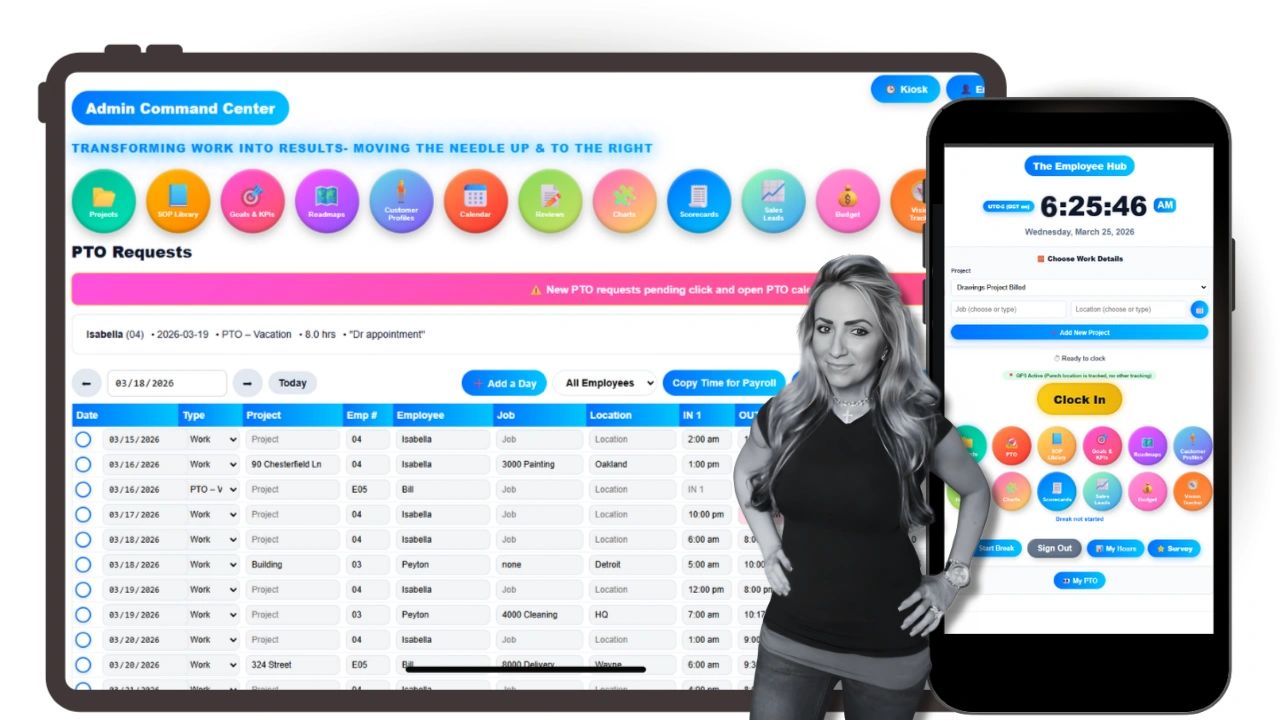
Learn the most critical items to look for when hiring a small business operation consultant. Most small businesses do not have a strategy problem. They have a systems problem.
In the early days, things feel manageable. You track hours in a spreadsheet, budgets in another, processes in a shared doc that half the team has never read. Communication happens through texts, emails, and memory. It works well enough when the team is small and you can see everything that is happening.
Then growth hits. You add employees, clients, and complexity faster than your informal systems can handle. Work starts falling through the cracks. Accountability becomes inconsistent. You spend more time putting out fires than building the business. Revenue increases but profit does not follow. You know something is wrong but you are not sure exactly what or where to start.
That is the moment most founders start thinking seriously about hiring a small business operations consultant.
What Is a Small Business Operations Consultant?
A small business operations consultant is an experienced operator who comes into your business, assesses how things are currently running, identifies where time and money are being lost, and builds the systems needed to fix it.
The key word is builds. A real operations consultant does not just advise. They get embedded in your business, work with your team, and create the operational infrastructure that allows your company to run predictably and scale without chaos.
That means turning informal habits into documented processes, creating visibility into performance and numbers across the business, aligning teams around clear ownership and accountability, and eliminating the manual work that eats your time and creates errors.
At its core, a small business operations consultant exists to answer one question: how do we make this business predictable and scalable?
Why Small Businesses Need Operations Help
Small businesses can often function without formal operations management when everyone knows everyone, the owner can see everything happening, and informal communication fills the gaps. That changes fast as the business grows.
Somewhere between ten and thirty employees, the informal approach starts to break down. Communication gaps appear. Work falls through the cracks. Quality becomes inconsistent because different people are doing the same tasks differently. The owner can no longer personally oversee every process. Costs start rising faster than revenue because nobody has a clear picture of where resources are actually going.
This is when operations management becomes not just useful but essential. The businesses that invest in their operations at this stage, by building documented processes, implementing proper systems, and establishing clear accountability, are the ones that scale smoothly. The ones that try to keep running on informal coordination and tribal knowledge hit a ceiling and often spend years stuck below it.
Common signs you need a small business operations consultant include feeling stuck despite putting in more effort, watching your team grow while performance stays inconsistent, making decisions without clear data, spending more time fixing problems than moving the business forward, and knowing what you want to achieve but having no structured system to get there.
What a Small Business Operations Consultant Actually Does
The scope of work varies depending on your business and what it needs most, but strong operations consultants focus on a consistent set of core activities.
They start with discovery and assessment, spending time understanding your current state by interviewing people at different levels of the organization, observing how work actually flows, and reviewing data. This step is critical because how work is supposed to happen and how it actually happens are often very different. The gap between those two things is where most operational problems live.
From there, they move into root cause analysis. Operational symptoms are usually caused by something deeper. A slow client onboarding process might look like a training problem but actually be caused by a software integration that forces staff to complete manual steps that should be automated. A good consultant digs past the symptom to find the real cause.
Then comes prioritization. Not everything can be fixed at once, and not everything deserves equal attention. Strong consultants rank improvements by the size of the impact versus the effort required to implement them. The changes that are easy to make and create significant value come first.
Finally, and most importantly, they support implementation. A consultant who hands you a strategy document and disappears has done half the job at best. The best engagements include hands-on help with change management, team training, and follow-up measurement to confirm the improvements are actually working.
The Five Core Levers of Small Business Operations
Before any software or automation, strong operations come down to five fundamental levers. A skilled small business operations consultant builds systems around all five.
- Time is the first lever. Where is your team actually spending hours? Without tracking it, you cannot manage it, price services correctly, or identify where inefficiency is hiding. Time is the one resource a small business cannot recover once it is gone.
- Revenue is the second lever. How does time convert into money? You need visibility into billable versus non-billable hours, revenue per project, and revenue per employee. When this connection is clear, pricing and profitability decisions become data-driven rather than gut-based.
- Cost is the third lever. What does it actually cost to run the business, including labor, tools, overhead, and all the small recurring expenses that add up quietly? Without this picture, profit is a guess dressed up as a number.
- Process is the fourth lever. How does work get done consistently? When processes are undocumented or unclear, work gets duplicated, mistakes increase, and productivity drops. Documented processes are what allow a business to grow without the owner as the bottleneck.
- Performance is the fifth lever. Are people and projects hitting their goals? This requires KPIs, clear targets, and accountability systems that make performance visible rather than assumed. These five levers are the backbone of every scalable operation. An operations engagement that does not address all five will leave gaps that cause problems later.
What to Look for When Hiring a Small Business Operations Consultant
Not all consultants deliver equal value. Many stay at a high strategic level and never touch execution. Here is what actually matters when evaluating candidates.
- Real operational experience is non-negotiable. You want someone who has run teams, built processes, and owned results in roles with actual accountability, not just someone who has advised from the outside. Ask for specific examples of what they built, what was broken before they arrived, what they changed, and what the measurable outcome was. Titles without outcomes are not useful data.
- Systems thinking separates the best consultants from the rest. A strong operator does not fix one problem in isolation. They see how time tracking connects to payroll, how projects connect to profitability, how employee performance connects to output. If a consultant cannot connect your systems, you will stay fragmented even after a successful engagement on any single issue.
- The ability to simplify is the test most people overlook. If things feel more complicated after hiring a consultant than before, that is a red flag. Good operations work produces fewer tools, clearer processes, and easier daily execution. Complexity is sometimes used to justify fees and create dependency. Avoid consultants who recommend solutions that require ongoing consulting to maintain rather than building your team's own capability.
- Measurable outcomes should be defined before the engagement starts, not after. Agree on what success looks like in specific numbers before any work begins. Handle time, error rate, employee productivity, cost per project, whatever is relevant to your situation. A consultant who resists being held to measurable outcomes is telling you something important.
- Cultural fit matters more than most founders account for. The consultant will be visible to your whole team. How they show up as a leader inside your organization, how they handle difficult conversations, how they treat people at every level, directly affects the success of the engagement.
Common Mistakes Small Businesses Make When Hiring Operations Help
- The same mistakes appear repeatedly across small business operations engagements. Knowing them in advance is the best protection against them.
- Adding more tools instead of fixing the system is the most common error. More software on top of broken processes creates more confusion, more manual work, and more disconnected data. The system needs to be fixed before technology can help it.
- Overcomplicating processes is the second trap. If your operational system requires a training manual just to navigate, it will not be followed. Simple systems with clear ownership and easy execution consistently outperform complex systems that nobody uses.
- Ignoring data visibility leaves you unable to answer the questions that matter. If you cannot quickly tell who is working, what they are working on, and what is profitable, you do not have operational control. Visibility is the foundation that everything else depends on.
- Waiting too long to fix the problem is expensive in ways that compound. The longer broken systems run, the messier your data becomes, the harder standardization gets, and the more time your team wastes on problems that should not exist. Proactive investment in operations infrastructure is always cheaper than reactive repair.
- Expecting the consultant to do the work without your team's involvement is a setup for failure. The best engagements require genuine participation from leadership, honest transparency about what is not working, and willingness to change how things have always been done.
Building a System That Lasts After the Engagement Ends
The goal of a good small business operations engagement is not dependency on the consultant. It is building internal capability that continues to function and improve after the engagement ends.
That means documented processes your team can follow and update, systems that are simple enough for new employees to learn quickly, metrics that give leadership ongoing visibility without requiring constant consultant involvement, and accountability structures that function independently of any single person.
This is also why tool selection matters. A business running time tracking in one tool, HR in another, CRM in a third, invoicing in a fourth, and project management in a fifth is paying for five subscriptions and still doing significant manual coordination between all of them. Integrated platforms that handle multiple functions in one place create the kind of operational clarity that sustainable growth requires.
Nicole Hullihen: Small Business Operations Consultant
Nicole Hullihen has built her consulting practice around one principle: make business operations simple, visible, and executable.
With experience across industries and a background in operations leadership, Nicole helps small businesses replace scattered spreadsheets with structured systems, build processes that actually drive decisions, and align teams around clear goals and accountability.
Her approach starts with the five core levers, time, revenue, cost, process, and performance, and builds outward from there. She works hands-on with founders and leadership teams to identify where the real problems are, not just the surface symptoms, and implement changes that stick because they are designed for how the business actually operates.
If your business is growing faster than your operations can support, Nicole is available for fractional and project-based engagements. Connect with her on LinkedIn or reach out through xecutethevision.com to start the conversation.
How Updoot Supports Small Business Operations
Updoot is the operational platform built for exactly the stage where a small business operations consultant does their best work. Instead of stitching together five different tools, Updoot connects time tracking, project management, HR and employee records, PTO and scheduling, payroll reporting, invoicing, CRM, SOPs, and KPI dashboards in one platform designed for teams of five to two hundred people.
When your operations all live in the same system, the visibility and accountability that good operations consulting is designed to create become part of how your business runs every day rather than something that requires ongoing external support to maintain.
For businesses working with a small business operations consultant, Updoot gives that consultant a single place to implement the systems they recommend, track whether those systems are working, and hand off a clean operational infrastructure when the engagement ends.
Final Thought
Hiring a small business operations consultant is one of the highest-leverage decisions a growing company can make at the right stage. Get it right and you unlock a new gear of growth. Get it wrong and you spend months unwinding a situation that cost you time, money, and momentum.
The businesses that scale cleanly are almost always the ones that invested in operational infrastructure before they desperately needed it. Find someone with real execution experience. Define measurable outcomes before you start. Make sure the result is a simpler, more visible, more accountable business.
Because advice without execution is just conversation. Systems are what actually change how a business runs.
Frequently Asked Questions
What does a small business operations consultant actually do? A real operations consultant builds systems that make your business run rather than just offering advice. That means turning chaotic processes into repeatable ones, creating visibility into numbers and performance, aligning teams so work actually gets done, and eliminating manual work and inefficiencies.
What should you look for when hiring a small business operations consultant? Prioritize someone with real operational experience running teams and owning results, not just someone who talks strategy. They should demonstrate systems thinking that connects time tracking to payroll to invoicing, the ability to simplify rather than complicate, and a focus on measurable outcomes like time saved, errors reduced, and productivity improved.
What are the five core levers of small business operations? The five levers are time, which tracks where your team is spending hours; revenue, which connects time to money through billable work and project revenue; cost, which captures what it actually costs to run the business; process, which defines how work gets done consistently; and performance, which measures whether people and projects are hitting goals.
What are the most common operational mistakes small businesses make? The most common mistakes are adding more software tools instead of fixing the underlying system, overcomplicating processes so they do not get followed, ignoring data visibility so basic questions about who is working and what is profitable cannot be answered quickly, and waiting too long to fix problems until data becomes too messy to standardize.
When should a business move from spreadsheets to a proper operations system? Spreadsheets work early but have limits as a business grows. When data updates fall behind, visibility disappears, and manual work becomes the norm, that is the signal to move to a connected system. The longer you wait the messier the data becomes and the harder standardization gets.
How do you know if an operations consultant is not working out? If things feel more complicated after hiring them than before, that is a red flag. The goal of good operations work is fewer tools, clearer processes, and easier execution. If you cannot measure specific improvements in time saved, revenue tracked, or errors reduced, the engagement is not delivering results.
Learn more about hiring COOs and consultants
How to Hire a Fractional COO: The Complete Guide
Average Salary for Chief Operating Officer 2026