
5 Reasons an Org Chart is Required in the Organization and How To
.png)
Your vision is to have better documentation around the structure of your company so people know who to go to for what and when. Ideally, you would have one-page visual reference employees could refer to to get answers to these types of questions. This is where an organizational chart or org chart comes in. This article is going to provide an example of what these look like, how to get started, and the value they bring to the business.
I’ve worked at places with very clear, published org charts, and I’ve worked at a place that thought titles shouldn’t really exist and therefore there was nothing published. One extreme to the other. I can say this, people need structure. If you want people to understand the vision, they need direction. To leave things up to interpretation is always going to be a disaster.
What is an org chart or organizational chart?
Org charts are diagrams set up like a chart to show reporting relationships, hierarchy, and structure of a business. They include the internal structure of a company. You will see boxes in place of employees, roles, titles, or jobs linked together by solid or dotted lines generally. Some may include photos or contact information of the various people included.
Actual observations with org charts or the lack thereof
Titles don't matter, no org chart
At the extreme end of minimizing titles and no organization chart, I can’t tell you how many arguments there were about who’s job responsibility was what. I blame this on the lack of the plan as a whole leading to duplicative hires and people grasping for the things they thought they should own. Additionally, it was always unclear who should sign off on various projects, and therefore, meetings would go on and on and on and on because of disagreements. Then you end up with people doing things off to the side and groups within groups because there was no approval process. I can see how you may think it could be useful for people to work things like this out on a team, but I’ve never once seen that actually work out without all kinds of strife.
Titles matter, published org chart
At the other extreme, where clear-cut roles were defined and published, there was never a question as to who should make what decision and approve which project. It was easy, you knew who to go to for what and work moved along fairly efficiently.
The top 5 reasons you should have an organizational chart
1. Identify the leaders in the organization.
Org charts make it clear to everyone how the chain of command works. Employees know where the buck stops.
2. This is a necessary tool for new hires to understand how the teams work.
Imagine you are new to a business, and no one gives you this tool. You are left to figure out who makes which decisions and approvals by having to ask the awkward question or worse by hearsay which may be completely inaccurate and varied responses.
3. They provide a view of organizational needs.
These charts provide a view into where there may be open positions, too many employees, and where holes are.
4. Clear view of how departments relate to each other.
Structure showing how departments are connected and reporting levels make it easy to know who should be looped in and where decisions stop. They also assist in preventing silos, which are not always clearly visible until it’s in a chart. You can also use these to look at where inefficiencies and overlap may be or where communication is lacking.
5. This is a visual to assist in role changes when promotions happen.
Similar to the new hire, when a person is promoted, some people may be familiar with titles, but many may not, and without clear visuals on what it means for the position, how are people supposed to know what the change means for how they should be interacting with the person or how it now affects their work and approvals?
How do you get started making an org chart?
Choose one of the types listed below that best fits how you think the organization should work together. Think about things like the level of creativity you want employees to have, how you want them to interact, whether you have issues with silos, how many locations or divisions you have, and who you want to approve various projects.
What are the types of organizational structure?
If you do some Googling, you will find slight variations in the naming of some of these. There are a lot of ways to set up the organizational structure. Some businesses are set up where the team leader of the project changes depending on the project and so in one project, you may be a manager, and another, a team member. Other businesses are set up with clear power flows. Below are the most common structures.
1. Hierarchical Organizational Structure
Most often you will see this with leadership at the top, and each job function below listed out and grouped by departments like marketing, design, etc. This is the most common structure.
Why is this useful: This style is more likely to hold people accountable, provide structure, and allow for the most efficiency. Clear defined levels of authority. It makes project organization straightforward.
Why not: It can lead to walls between areas if not careful, and hamper creativity.
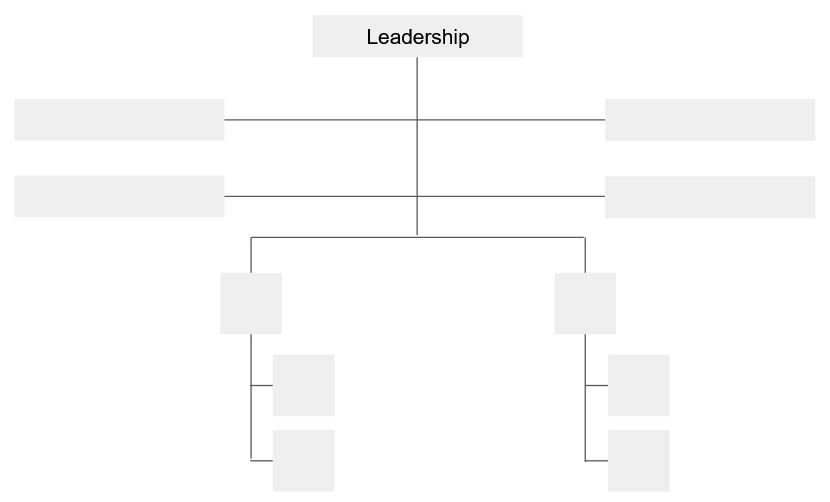
2. Functional Organizational Structure
This is very similar to a hierarchical structure, with the primary difference being each department has a department head that reports up to the CEO.
Why is this useful: Employees develop specific roles, it's easy to scale for any size business and departments are self-sufficient.
Why not: Communication can be hindered as employees may be less likely to work with other departments.
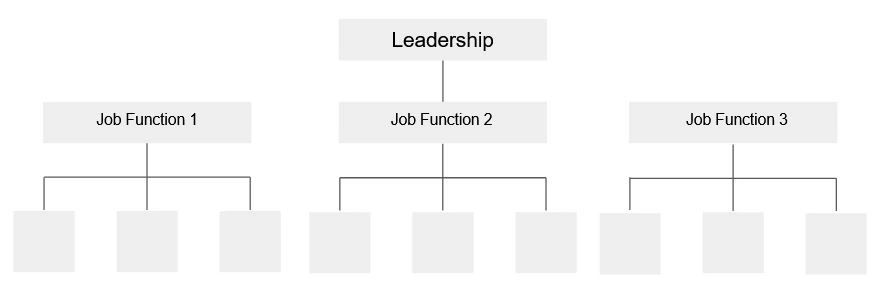
3. Product-Based or Market-Based Division Organizational Structure
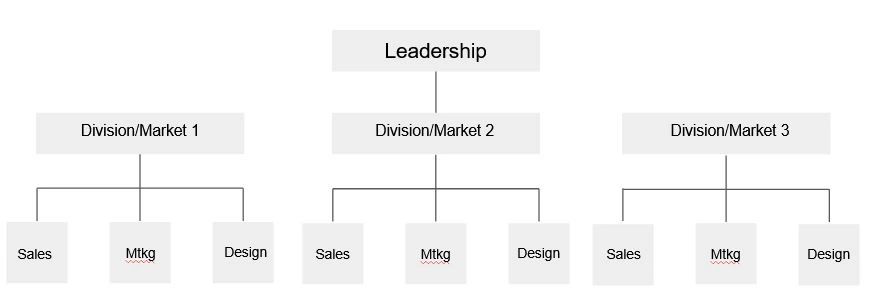
Similar to functional, leadership is at the top, and instead of breaking out by departments, the next level down would be product divisions or industry, market, customer type, and then the departments within each of those sections.
Why is this useful: Risk is reduced because you can make tweaks to divisions that are performing poorly.
Why not: You may end up with duplicative hires here, and divisions that work too independently to be effective. You may end up with multiple software being used for similar tasks, and a business that is not unified.
4. Process-Based Organizational Structure
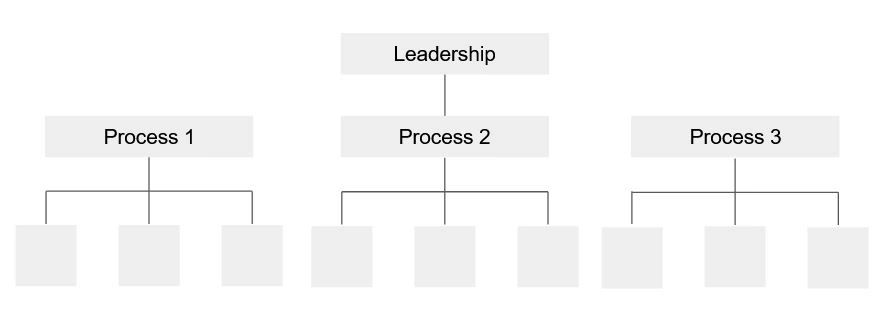
Leadership is at the top, and these charts are read from left to right because it goes process to process. One has to be done before the next. The lines on the chart show how the processes interact together.
Why is this useful: The goal is to work faster and more efficiently because processes have to be done and passed off.
Why not: You may run into issues in trying to hand off work which can create roadblocks.
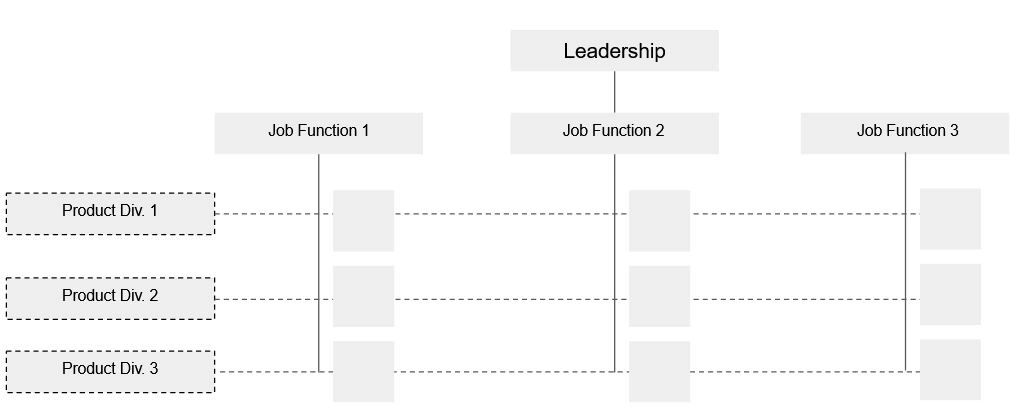
5. Matrix Organizational Structure
Leadership is at the top, and employees have dotted line relationships representing dual reporting relationships.
Why is this useful: The goal is to promote collaboration and communication. Supervisors can pick the best person for the job, and employees will learn other skills with how this set up.
Why not: These are confusing due to all the lines and having to figure out the primary/secondary relationships. Sometimes there is a conflict of interest with this one.
6. Flat Organizational Structure
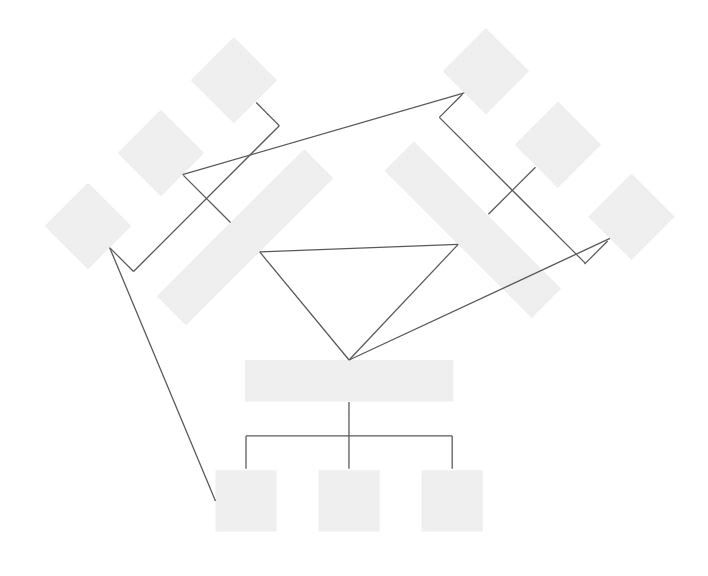
This doesn’t always have a particular shape to it, but the idea is to limit management and people are all within a few levels of leadership.
Why is this useful: Expenses are reduced by not having middle management and decisions can be quicker with fewer levels to go through. Employees have to be more independent and responsible.
Why not: These are confusing as it’s not always clear who to go to for approvals and decisions. This doesn't scale well as the company grows and employees tend to lack supervision in this setup.
7. Circular Organizational Structure
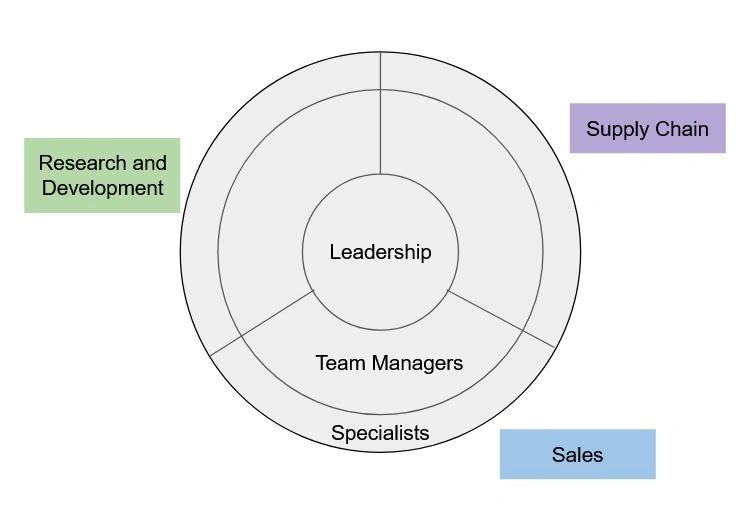
This is actually a circle, with leadership in the center and departments on the outside. The idea is that leaders start from the center and provide guidance outward.
Why is this useful: It’s a different approach to attempt to align employees with goals and to encourage collaboration.
Why not: These are confusing as it’s not clear where people fit within the organization.
8. Network Organizational Structure
This is almost the same as the divisional structure and it is useful if you have outsourcing or other tasks are done off-site.
Why is this useful: It can save money so full departments aren’t needed.
Why not: These are confusing when there are several outsourced projects that may be somewhat similar or identical.
9. Geographical Organizational Structure
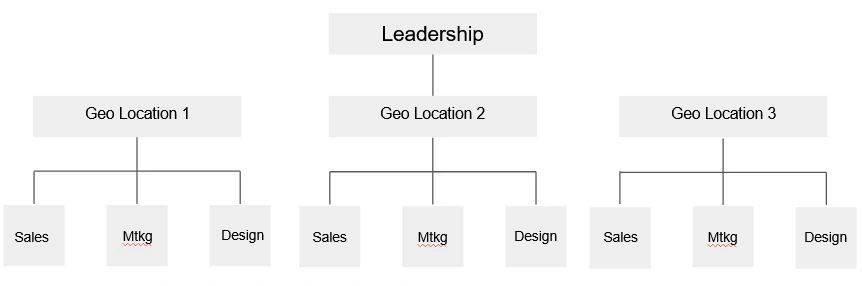
Leadership is at the top, and the next level is split out by the area of a map.
Why is this useful: The business can cater to customers in specific locations with various customs and languages.
Why not: You may end up with campaigns that compete, and decisions often won’t be unified.
In summary, there are several ways to design organizational structure and each has pros and cons. The bottom line is to get started in documenting what this looks like for your organization so you can clearly communicate vision, provide guidance and allow work to happen more efficiently. There is no one right answer that fits all businesses.
Utilize the org chart creator in Updoot, start FREE today.