
Owners Draw: What It Is, How It Works
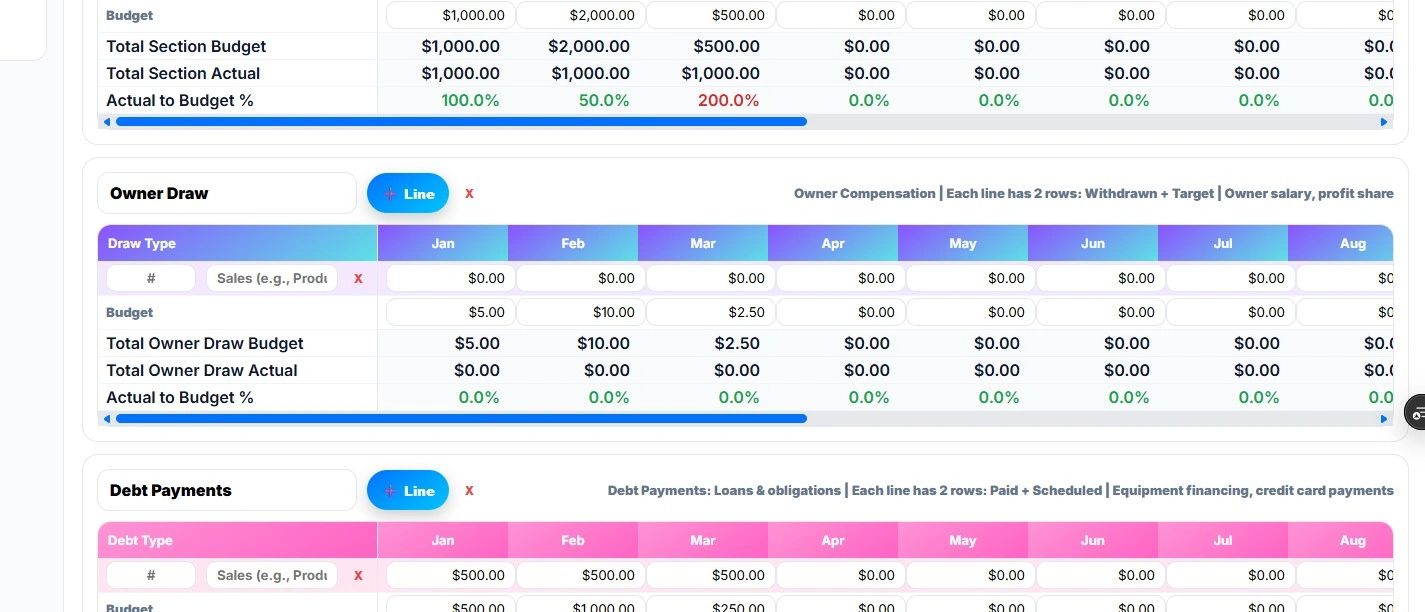
Here is exactly what an owner's draw is, how it works, when to use it, and how it affects your taxes. One of the most common questions small business owners ask is also one of the most basic: how do I actually pay myself? If you own a business, you are not an employee in the traditional sense. You do not get a paycheck deposited every two weeks with taxes already withheld. You have to make a deliberate decision about how money moves from your business to your personal account, and that decision has real tax and legal consequences depending on how your business is structured.
An owner's draw is one of the two primary ways business owners pay themselves. Understanding what it is, when you can use it, how it is taxed, and how it compares to taking a salary is essential for anyone running a small business who wants to stay compliant and financially healthy.
This guide covers all of it, without the jargon.
What Is an Owner's Draw?
An owner's draw is when a business owner takes money directly out of the business for personal use. It is not a salary. It is not a paycheck. It is a withdrawal of money from the equity you have built in the business, transferred to your personal account when you need it.
Also called a personal draw or simply a draw, this method of paying yourself is common among sole proprietors, partners in a partnership, and owners of limited liability companies. Instead of setting up formal payroll, writing yourself a W-2, and processing withholdings, you simply transfer money from your business bank account to your personal account when the business has funds available and you need the cash.
The draw reduces your owner's equity in the business. It does not count as a business expense, which means it does not reduce your business's taxable income the way a salary would.
How Does an Owner's Draw Work?
Taking an owner's draw is straightforward from a mechanical standpoint. You write yourself a check, initiate a transfer from your business bank account to your personal account, or in some cases withdraw cash directly. There is no payroll system required and no specific schedule you are required to follow. You can take a draw whenever the business has sufficient funds and whenever you personally need the money.
The flexibility is one of the main reasons business owners prefer draws over salaries. If your business has a strong month you can take a larger draw. If cash flow is tight you can skip a draw entirely without any payroll complications. For businesses with seasonal or irregular revenue, this adaptability is genuinely valuable.
However, the absence of withholding is where many business owners get into trouble. When you take a salary, taxes are withheld automatically. When you take a draw, you receive the full amount and you are personally responsible for setting aside and paying taxes on your own. That requires discipline and planning that not everyone anticipates when they start drawing from their business.
In your accounting records, an owner's draw is recorded as a reduction in owner's equity, not as an expense. This distinction matters for understanding your financial statements and for tax purposes.
Who Can Take an Owner's Draw?
Not every business structure allows for an owner's draw. Whether you can take one depends on how your business is legally structured and how it is taxed.
Sole proprietorships have the most flexibility. Because there is no legal distinction between you and your business, you can transfer money between your business and personal accounts whenever you choose. The IRS does not have a concept of an owner's draw for a sole proprietor in the way it does for other structures. You simply take money out as needed and report all business profits as personal income.
Partnerships also allow owner's draws, often referred to as partner draws or partner distributions. Partners can take draws at any time as long as there are sufficient funds and the partnership agreement permits it. Partners are taxed on their share of business profits regardless of how much they actually withdrew, so the draw amount itself is not what determines the tax bill.
Single-member LLCs function like sole proprietorships for tax purposes by default, so the draw rules are the same. You can take money out whenever you need to without running payroll.
Multi-member LLCs function like partnerships by default. Members can take draws, and each member is taxed on their proportional share of business profits.
S corporations are more complicated. Owners of S corporations who actively work in the business are required by the IRS to pay themselves a reasonable salary as a W-2 employee before taking any distributions. Distributions from an S corporation are different from owner's draws in a traditional sense, though the terms are sometimes used interchangeably. The key distinction is that S corp owners must pay reasonable compensation first, then can take additional distributions on top of that.
C corporations do not allow owner's draws at all. Owners of C corporations are paid through formal salaries, and any money distributed beyond that is treated as a dividend, which is subject to double taxation: once at the corporate level and again at the personal level when reported as dividend income.
Owner's Draw vs Salary: What Is the Difference?
The comparison between an owner's draw and a salary comes up constantly for small business owners, and the right answer depends on your business structure, your cash flow situation, and your tax planning goals.
An owner's draw is flexible, does not require payroll processing, has no withholding at the time of payment, does not count as a business expense, and reduces your owner's equity. You receive the full amount immediately and manage tax obligations separately.
A salary is paid on a regular schedule, requires payroll processing, has federal and state income taxes withheld plus Social Security and Medicare contributions, counts as a deductible business expense, and gives you a W-2 at year end.
For sole proprietors and single-member LLCs, the draw method is the most straightforward and widely used approach. For S corporation owners, a combination of salary and distributions is both required and often tax-advantageous. For C corporation owners, a salary is the only real option for paying yourself, with dividends as a secondary mechanism.
The tax treatment is where the difference becomes most meaningful. A salary creates payroll tax obligations that both the employee and employer side of the business share. In an S corp, taking some income as salary and some as distributions can reduce the total self-employment tax burden because distributions from an S corp are not subject to self-employment taxes the way wages are. This is one of the primary reasons some small business owners elect S corp taxation.
How Is an Owner's Draw Taxed?
This is the question that causes the most confusion, and it deserves a clear answer.
When you take an owner's draw, no taxes are withheld at the time you take the money. You receive the full amount. But that does not mean the draw is tax-free. It means the tax obligation is deferred until you file your personal return.
For sole proprietors, partners, and most LLC owners, your tax liability is based on your share of the business's net profit, not on how much you actually drew. If your business earns $150,000 in profit and you only drew $80,000, you still owe income tax on the full $150,000. The draw amount does not determine your tax bill. The profit does.
Self-employment tax is an additional obligation for most business owners who take draws. Sole proprietors, partners, and LLC owners paying themselves through draws are generally responsible for self-employment tax at 15.3%, which covers Social Security and Medicare contributions. In a traditional employment situation, these are split between employee and employer. As a self-employed business owner, you pay both sides.
Because no taxes are withheld when you take a draw, the IRS expects you to make quarterly estimated tax payments throughout the year to cover your anticipated income tax and self-employment tax liability. Missing these payments or underpaying can result in penalties when you file your annual return.
A practical approach many accountants recommend is to set aside 25 to 35 percent of every draw you take into a separate account reserved for taxes. The exact percentage depends on your tax bracket and state tax obligations. This reserve becomes your quarterly estimated payment fund and prevents the year-end surprise of a large tax bill with no cash to cover it.
How Much Should You Take as an Owner's Draw?
There is no universal formula, but there are several factors that should inform the decision.
What the business can afford. Taking a draw that leaves the business without enough cash to cover its operating expenses is the fastest way to create a financial crisis. Before drawing anything, make sure your business has enough reserves to cover accounts payable, payroll for any employees, upcoming bills, and a reasonable operating cushion.
What you personally need. Your draw needs to cover your personal expenses, including housing, insurance, savings, and whatever other obligations you have outside the business. Understanding your personal monthly minimum gives you a floor for what your draw needs to be.
Your tax liability. Remember that your tax bill is based on business profit, not draw amount. If the business is profitable, you will owe taxes even if you took very little. Factor that into how much you keep in the business versus draw out.
Reasonable compensation standards. Even for business structures that do not require formal salaries, the IRS pays attention to whether owners are compensating themselves at a rate that reflects the market value of their work. Taking unreasonably low compensation to minimize taxes is a flag that can trigger scrutiny.
Growth and reinvestment needs. If the business is in a growth phase, keeping more capital in the business to fund operations, hiring, or expansion may take priority over maximizing your draw in any given period.
How to Record an Owner's Draw
Proper bookkeeping for owner's draws is straightforward but important. Every draw should be recorded in your accounting system as a debit to the owner's equity account and a credit to cash. This reduces your equity balance and accurately reflects the cash leaving the business.
Do not record an owner's draw as a business expense. This is one of the most common bookkeeping errors small business owners make. A draw is not an expense. It does not reduce your taxable business income. Categorizing it as an expense misrepresents your financials and creates problems at tax time.
Keep records of every draw including the date, amount, and the fact that it was an owner's draw. If you are ever audited or need to demonstrate your business's financial history to a lender or investor, clean records of owner draws show that you understand the difference between business and personal finances.
Common Owner's Draw Mistakes to Avoid
Commingling business and personal funds. Taking a draw is fine. Paying for personal expenses directly out of the business account without recording them properly is not. Every transaction should be documented and categorized correctly.
Not setting aside money for taxes. The most common painful surprise for new business owners is a large tax bill in April with no cash to pay it. Set aside a percentage of every draw from day one.
Missing quarterly estimated tax payments. The IRS expects you to pay taxes as you earn income, not just at year end. If you are taking draws throughout the year without making quarterly payments, you may owe penalties in addition to the tax itself.
Taking draws larger than the business can sustain. Drawing more than the business earns or draining reserves too aggressively puts the business at risk. Your personal income needs and business financial health have to be balanced.
Not distinguishing draws from loans. Sometimes business owners borrow money from their business with the intention of paying it back. A loan and a draw are treated very differently in accounting and for tax purposes. If you are taking a loan from your business, document it as a loan with terms and repayment expectations. Do not informally call it a draw and then confuse the two later.
Owner's Draw and Business Financial Visibility
One thing that becomes clear once you start taking owner's draws is how important it is to have a clear, real-time picture of your business's financial position. You cannot make smart decisions about how much to draw if you do not know what the business can actually afford at any given moment.
This is where running your business with proper systems matters. When your project revenue, expenses, team time, and cash position are visible in one place, the decision of how much to draw and when becomes informed rather than guesswork.
Updoot is built to give small business owners exactly that kind of operational visibility. When you can see what projects are generating revenue, what your team is working on, and how your time is being spent, you have the foundation you need to make financial decisions, including owner's draws, with confidence rather than anxiety. Running a tighter operation means the business produces the profit that makes sustainable draws possible in the first place.
Key Takeaways
An owner's draw is a withdrawal of money from a business by its owner for personal use, reducing owner's equity rather than counting as a business expense.
Owner's draws are available to sole proprietors, partners, and most LLC owners. S corporation owners must take a reasonable salary before taking distributions. C corporation owners cannot take draws.
No taxes are withheld when you take a draw. You are responsible for paying income tax and self-employment tax on business profits, typically through quarterly estimated payments.
Your tax liability is based on business profit, not on how much you drew. You can owe taxes on profits you never took out of the business.
Set aside 25 to 35 percent of every draw for taxes, make quarterly estimated payments, and keep clean records of every draw in your accounting system.
The right draw amount balances your personal financial needs, your business's cash position, your tax obligations, and your plans for business growth.
Frequently Asked Questions
What is an owner's draw?An owner's draw is money a business owner takes out of the business for personal use. It is a withdrawal from owner's equity, not a salary or business expense. It is most commonly used by sole proprietors, partners, and LLC owners.
Is an owner's draw taxable?Yes, but not at the time you take it. No taxes are withheld when you take a draw. Your tax liability is based on your share of business profits, and you pay that through quarterly estimated tax payments and your annual personal income tax return.
What is the difference between an owner's draw and a salary?A salary is paid on a regular schedule with taxes withheld and counts as a business expense. An owner's draw is taken at any time with no withholding and does not count as an expense. Salaries reduce business taxable income. Draws do not.
Can S corporation owners take an owner's draw?
S corporation owners who work in the business must first pay themselves a reasonable salary as a W-2 employee. After that, they can take additional distributions, which are sometimes called owner's draws but are technically distributions and are taxed differently from wages.
How much should I take as an owner's draw?
There is no set formula. Your draw should cover your personal expenses, be supportable by the business's cash position, account for your tax liability, and leave enough in the business for operations and growth. Working with an accountant to set a sustainable draw amount is strongly recommended.
Do I need to record an owner's draw in my accounting system?
Yes. Every draw should be recorded as a reduction in owner's equity, not as a business expense. Accurate records protect you in an audit, give you a clear picture of your equity position, and keep your financial statements accurate.
What happens if I take too large an owner's draw?
If your draws exceed your business's equity, you create a negative equity balance, which can create tax complications and signal financial instability to lenders or investors. Drawing more than the business can sustainably support also risks leaving the business without the cash it needs to operate.
Note: This article is for informational purposes only and does not constitute tax or legal advice. Consult a qualified CPA or tax professional for guidance specific to your business structure and situation.
Managing your business operations, tracking project revenue, and keeping your team accountable all in one place gives you the financial clarity to make decisions like owner's draws with confidence. See how Updoot helps small business owners run tighter, more visible operations at updoot.com.
Related articles on Finance
Direct Costs vs Indirect Costs: Definitions and Examples
Revenue vs Sales: What Is the Difference
How to Lower Customer Acquisition Costs for Small Businesses
Annual Budget Template Google Sheets
What is a P&L Statement and How to Create One