
Marketing Budget Optimization: How to Get More From Spend
Most marketing teams are not losing to competitors with bigger budgets. They are losing to competitors who are smarter about how they use what they have. Marketing budget optimization is not about spending less. It is about making every dollar work harder, cutting what is not producing, doubling down on what is, and building a system that gets better over time.
What Marketing Budget Optimization Actually Means
Marketing budget optimization is the ongoing process of analyzing how your marketing spend is performing and reallocating dollars toward higher return activities. It sounds simple but most organizations never actually do it because they are too busy executing to step back and evaluate.
The signs that your marketing budget needs optimization are usually obvious once you know what to look for:
- You are spending roughly the same amount on the same channels year over year regardless of results
- You know some campaigns are not working but they are still running because nobody has made the call to cut them
- Your cost per lead has been creeping up for months but nobody has investigated why
- Marketing and sales disagree on which leads are worth pursuing which means you are paying for leads that will never close
- You have no clear picture of which channel is producing your best customers not just your most leads
Any one of these is a signal that budget is being wasted. All of them together mean significant revenue is being left on the table.
Start With the Marketing Data You Already Have
The first step in marketing budget optimization is not moving money around. It is understanding where you actually are. Most marketing teams have more data than they realize and less clarity than they need.
Before changing anything pull together the following for every active channel and campaign:
- Total spend over the last 12 months
- Number of leads or contacts generated
- Number of marketing qualified leads passed to sales
- Number of opportunities created
- Number of closed deals that can be traced back to that channel
- Average deal size for customers from that channel
- Average time from lead to close for that channel
Most teams stop at leads or opportunities. The optimization happens when you get to closed deals and deal size. A channel that produces twice the leads at half the deal size may be costing you more than it is producing. You cannot see that without the full picture.
The Optimization Framework
Once you have the data, the optimization process follows a straightforward framework that you should run at least quarterly.
Identify your highest return channels first. These are the channels where your cost per closed deal is lowest and your customer lifetime value is highest. Whatever is working here deserves more investment before you do anything else. Most teams underinvest in their best channels because they are distracted by channels that look promising but have not proven out yet.
Cut or pause everything that has had a fair test and failed. A fair test means enough time and enough budget to produce statistically meaningful results. For paid channels that is usually 60 to 90 days with sufficient volume. For content and SEO that is 6 to 12 months. If something has had a fair test and is not producing, stop funding it. The money is better deployed elsewhere.
Fix before you cut. Before cutting a channel entirely ask whether the problem is the channel or the execution. A paid search campaign with a poor landing page will fail not because paid search does not work but because the conversion path is broken. Optimization sometimes means fixing what you have rather than abandoning it.
Test one new thing at a time. Optimization is not just about cutting. It is about finding new channels and tactics that could become your next high performer. But testing too many things at once means none of them get enough budget or attention to produce a real result. Run one meaningful test per quarter with a clear hypothesis and a clear success metric.
Where Most B2B Marketing Budgets Are Being Wasted
There are patterns that show up repeatedly when auditing B2B marketing budgets. Understanding where waste typically hides helps you find it faster in your own organization.
Brand keywords you already own. Many companies spend significant money bidding on their own brand name in paid search. If someone is already searching for you by name they are likely to find you organically. Test pausing brand keyword spend and measure whether organic traffic absorbs it before deciding to keep funding it.
Content that was never promoted. Creating content without a distribution budget is one of the most common forms of marketing waste. A blog post or whitepaper that nobody sees cost real money to produce. Either build a promotion budget into every content investment or stop creating content you cannot distribute.
Events with no follow-up plan. Trade show and conference spend is notoriously hard to measure partly because most companies attend without a clear lead capture and follow-up process. If you cannot tie event spend to pipeline within 90 days of the event you probably do not have enough process around it to justify the cost.
Tools nobody is using. Marketing technology stacks have a way of accumulating subscriptions that made sense at the time but are now underused or completely abandoned. An annual audit of every marketing tool and its actual usage rate almost always finds savings.
Targeting that is too broad. Paid social campaigns in B2B frequently fail not because the channel does not work but because the audience targeting is too wide. Spending money reaching people who will never buy is pure waste. Tightening audience parameters almost always improves efficiency even if it reduces volume.
How to Maximize What You Are Already Spending in Marketing
Optimization is not always about reallocation. Sometimes the biggest gains come from improving the performance of what you are already doing without spending more.
Improve your conversion rates. If you can double your landing page conversion rate you effectively double the value of every dollar spent driving traffic to it. Conversion rate optimization is one of the highest return investments in marketing and one of the most consistently underfunded.
- Test one element at a time starting with headlines and calls to action
- Use heatmaps and session recordings to understand where people are dropping off
- Shorten forms to the minimum fields you actually need
- Make sure the message in your ad matches the message on your landing page exactly
Improve your lead to opportunity rate. If marketing is generating leads that sales is not converting, the problem may be lead quality, lead routing, or follow-up speed. Any of these can be fixed without increasing spend.
- Define and agree on a marketing qualified lead definition with sales
- Audit how quickly leads are being followed up with after they come in
- Review the quality of the leads being passed and whether the targeting needs adjustment
- Build a nurture sequence for leads that are not ready to talk to sales yet
Improve your customer lifetime value. The math on customer acquisition cost looks very different when your average customer stays for three years instead of one. Marketing budget optimization is not just about getting customers cheaper. It is about getting customers who stay longer and spend more.
Building an Optimization Cadence
The biggest mistake organizations make with marketing budget optimization is treating it as an annual exercise. By the time the annual review happens half the year's budget is already spent and most of the waste has already occurred.
An effective optimization cadence looks like this:
- Weekly: Review channel level performance metrics and flag anything that is trending significantly above or below expectations
- Monthly: Review spend vs plan by channel, review lead quality metrics, identify any campaigns that need to be paused or adjusted
- Quarterly: Full budget review including reallocation decisions, test results evaluation, and planning for the next quarter
- Annually: Strategic budget setting for the coming year based on full year performance data and business goals
The weekly and monthly reviews do not need to be long. Fifteen minutes with the right dashboard is enough to catch problems early and prevent small issues from becoming expensive ones.
The Role of Attribution in Optimization
You cannot optimize what you cannot measure and you cannot measure what you cannot attribute. Attribution is one of the most contentious topics in B2B marketing because the buying cycle is long, multiple touches are involved, and most attribution models oversimplify what actually happened.
The most important thing is not finding the perfect attribution model. It is picking one, applying it consistently, and using it to make relative comparisons between channels over time. Common approaches include:
- First touch attribution which gives all credit to the first channel that generated the lead
- Last touch attribution which gives all credit to the channel that drove the conversion
- Linear attribution which spreads credit equally across all touches
- Time decay attribution which gives more credit to touches closer to the conversion
No model is perfect. First touch tends to overvalue awareness channels. Last touch tends to overvalue bottom of funnel channels. Linear and time decay models are closer to reality but harder to implement. The key is consistency so you are comparing channels on the same basis over time.
Aligning Budget Optimization in Marketing With Business Goals
Marketing budget optimization does not happen in a vacuum. The decisions you make about where to spend and where to cut should always connect back to what the business is trying to accomplish.
If the business goal is accelerating new customer acquisition, optimization looks different than if the goal is expanding revenue from existing customers. If the business is entering a new market, some spend on brand awareness that would normally be hard to justify makes more sense. If the business is cutting costs across the board, the optimization conversation shifts to finding the minimum effective spend to maintain pipeline.
The questions to ask before every reallocation decision are:
- Does this support the current business priority or a past one
- Is there evidence this will produce a return in the timeframe we need
- What is the opportunity cost of putting this money here instead of somewhere else
- Who is accountable for the result and how will we measure it
Budget optimization without strategic alignment just produces efficiently spent money going in the wrong direction.
Keeping Optimization Running All Year
The operational side of marketing budget optimization requires real time visibility into spend, performance, and variance. Most teams are working from monthly finance reports that are already two weeks old by the time they arrive. By then the damage is done.
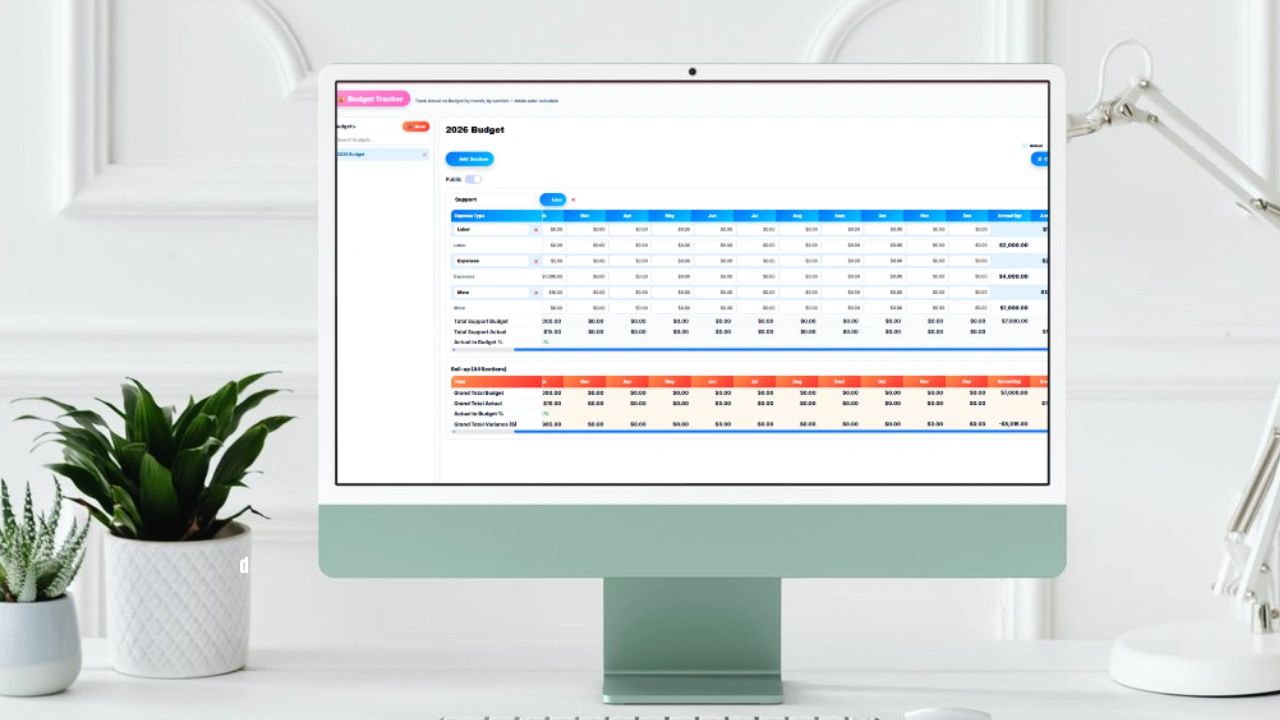
The teams that optimize most effectively are the ones with systems that give them a live view of what is being spent, what it is producing, and where they stand against plan at any given moment.
For organizations that want to manage marketing and operational budgets alongside the rest of their business in one place, Updoot includes a budget tracking feature built directly into its operations platform. You can set budgets, track actual spend in real time, and monitor variance without leaving the system where your team, projects, schedules, and invoices already live. When everything is in one place the optimization conversations happen faster and the decisions get made with better information. Start free for 14 days with no credit card required at app.xecutethevision.com.