
Job Description Format to Follow and a Template
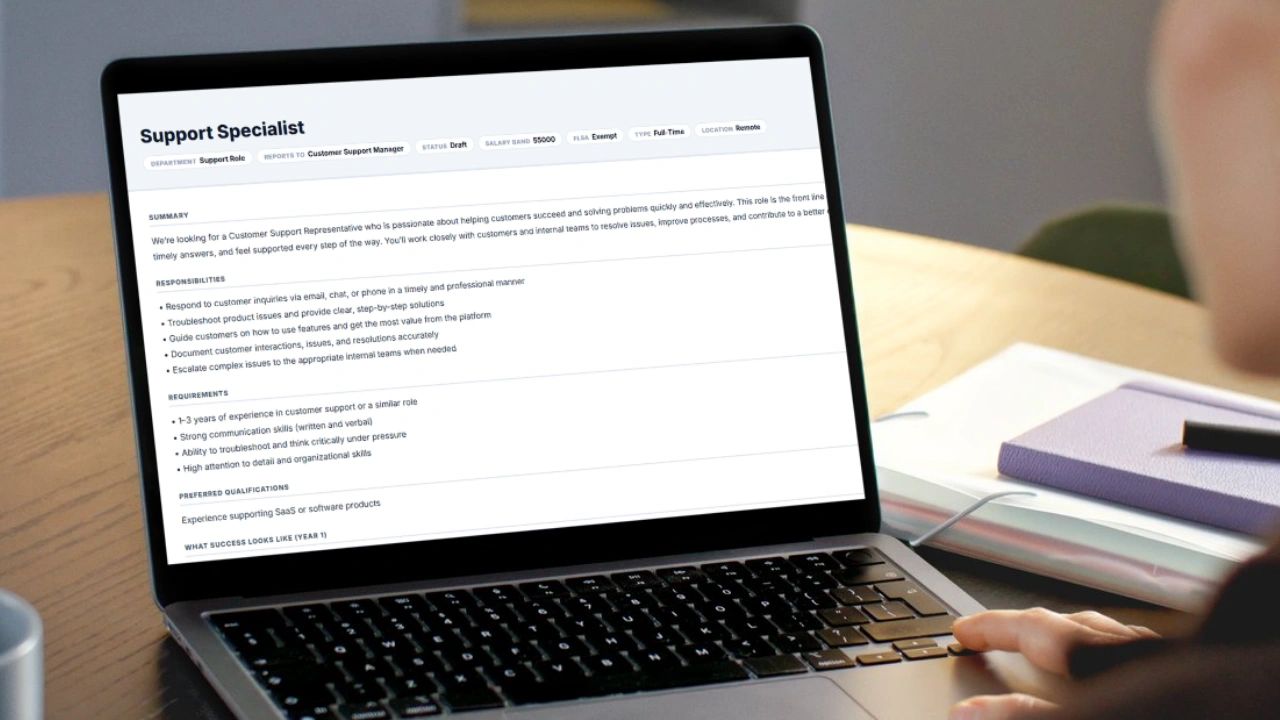
How to Structure Clear, Effective Job Descriptions That Attract the Right Candidates
A job description is one of the most important tools in hiring.
It is often the first impression a candidate has of your company, your role, and your expectations. If it is unclear, generic, or poorly structured, you will attract the wrong applicants or lose the right ones.
The problem is not that companies do not write job descriptions. It is that they do not follow a clear format.
A strong job description format creates clarity, attracts better candidates, and improves hiring outcomes. It also helps internally by aligning teams on what success in the role actually looks like.
This guide will walk you through the ideal job description format, explain what to include in each section, and give you a clean template you can copy and use immediately.
Why Job Description Format Matters
Most job descriptions fail for one reason: they are written without structure.
You will often see:
- Long paragraphs with no organization
- Vague responsibilities
- Overloaded requirement lists
- No clear outcome or expectations
This leads to:
- Confused candidates
- Poor applicant quality
- Longer hiring cycles
- Misaligned expectations after hiring
A strong format solves this by making the job description easy to read, easy to understand, and easy to act on.
What a Good Job Description Should Do
A well-structured job description should answer five key questions:
- What is the role
- What will the person actually do
- What skills are required
- How will success be measured
- Why should someone want the job
If your job description does not clearly answer these, it is not doing its job.
The Ideal Job Description Format
Below is the structure you should follow every time.
1. Job Title
Keep it clear and standard.
Avoid:
- Creative titles
- Internal jargon
Use titles candidates actually search for.
Example:
- “Operations Manager” instead of “Operations Ninja”
2. Job Summary
This is a short paragraph that explains:
- What the role is
- What the person will do
- How the role fits into the company
It should be simple and direct.
Example:
“This role is responsible for managing daily operations, improving processes, and ensuring projects are completed on time and within budget.”
3. Key Responsibilities
This is where most job descriptions go wrong.
Do not write paragraphs. Use bullet points.
Each responsibility should be:
- Specific
- Action-oriented
- Easy to understand
Example:
- Manage daily operations and team performance
- Oversee project timelines and deadlines
- Coordinate cross-functional teams
- Track and report key performance metrics
4. Required Qualifications
List only what is truly required.
This includes:
- Education (if necessary)
- Experience
- Core skills
Avoid inflating this section.
Example:
- 3+ years of operations or project management experience
- Strong organizational and time management skills
- Experience with scheduling or workflow systems
5. Preferred Qualifications
This section is optional.
Use it for:
- Nice-to-have skills
- Additional experience
Example:
- Experience with SaaS platforms
- Background in process improvement
6. Skills and Competencies
This section highlights how the person works.
Examples:
- Communication skills
- Problem-solving ability
- Attention to detail
- Leadership
Keep it concise.
7. Work Environment and Schedule
Set expectations clearly.
Include:
- Work hours
- Remote or in-office
- Shift requirements (if applicable)
Example:
- Full-time, Monday through Friday
- Occasional evening or weekend work
8. Compensation and Benefits (Optional but Recommended)
Transparency helps attract better candidates.
Include:
- Salary range
- Benefits
- Perks
9. Success Metrics
This is one of the most overlooked sections.
Define what success looks like.
Example:
- Projects completed on time
- Improved operational efficiency
- Increased team productivity
This aligns expectations from day one.
10. Company Overview
Keep it short.
Explain:
- What your company does
- Your mission
- Why it matters
This helps candidates connect with your business.
Best Practices for Writing Job Descriptions
1. Be Specific
Avoid vague language like:
- “Help with tasks”
- “Assist team members”
Be clear about what the person will actually do.
2. Keep It Readable
Use:
- Bullet points
- Short sections
- Clear headings
Candidates scan before they read.
3. Avoid Overloading Requirements
Too many requirements reduce applicant quality.
Focus on what truly matters.
4. Write for the Candidate
This is not an internal document.
Write in a way that:
- Speaks to the candidate
- Explains value
- Creates interest
5. Align With Actual Work
Make sure the description matches reality.
If it does not, you will:
- Hire the wrong person
- Create frustration
- Increase turnover
Common Job Description Mistakes
1. Too Generic
Generic descriptions attract generic applicants.
2. Too Long
If it feels overwhelming, candidates will skip it.
3. No Clear Outcome
If success is not defined, expectations will be unclear.
4. Internal Language
Avoid terms only your company understands.
5. Outdated Information
Keep job descriptions current as roles evolve.
How Job Descriptions Connect to Operations
A strong job description is not just for hiring.
It also helps with:
- Performance management
- Training
- Role clarity
- Team alignment
When roles are clearly defined, teams operate more efficiently.
Copy Paste Job Description Template (Word / Google Docs)
Use this template directly.
JOB DESCRIPTION
Job Title: [Insert Job Title]
Job Summary: [Write a brief overview of the role, including what the person will do and how they contribute to the company.]
Key Responsibilities:
- [Responsibility 1]
- [Responsibility 2]
- [Responsibility 3]
- [Responsibility 4]
- [Responsibility 5]
Required Qualifications:
- [Requirement 1]
- [Requirement 2]
- [Requirement 3]
Preferred Qualifications:
- [Optional Qualification 1]
- [Optional Qualification 2]
Skills and Competencies:
- [Skill 1]
- [Skill 2]
- [Skill 3]
Work Environment and Schedule: [Describe hours, location, and expectations.]
Compensation and Benefits: [Include salary range, benefits, and perks if applicable.]
Success Metrics:
- [Metric 1]
- [Metric 2]
- [Metric 3]
Company Overview: [Brief description of your company, mission, and what makes it unique.]
Final Thoughts
A job description is not just a formality.
It is a tool that defines expectations, attracts the right candidates, and sets the foundation for success.
If your hiring process is not producing the right results, the problem often starts here.
Fix the format, and everything downstream improves.
Take Job Descriptions Further with Updoot
Once you hire the right people, the next challenge is managing their work effectively.
Updoot helps you go beyond job descriptions by connecting roles directly to execution.
With Updoot, you can:
- Assign employees to projects, jobs, and locations
- Schedule shifts based on real work
- Track time through kiosk and punch systems
- Manage everything through a centralized admin dashboard
- Align employee responsibilities with actual output
Instead of roles living on paper, they become part of your daily operations.
That is where real efficiency happens.
Find more free templates here
Weekly and biweekly meeting agenda template
Level 10 meeting agenda template