
Everything on a Bill of Materials BOM in Costing Manufacturing
.png)
Your vision is to accurately forecast materials using a bill of materials.
You need a bill of materials or BOM to review material usage, needs, scrap, labor costs, and have documentation of some sort to pass to a factory for production. Your solution is to better understand what needs to be on a Bill of Materials or Build of Materials or BOM to be most effective. Having spent a lot of time with BOMs in a few different industries, they are very detailed and labor-intense at times, but you have to have them. This article will walk through why you need these and everything you need to include.
Why do you have to have BOMs?
These are how you will recognize waste or scrap, communicate effectively with factories, and efficiently order materials. If done correctly, you will have the material required to complete each widget and so using that, you can get to a final cost of the product, which can then get you to pricing and margins.
Who Makes the BOMs?
Most often it’s someone in engineering, possibly with the assistance of someone in development. It depends on the industry, sometimes it could be finance. Either way, it’s someone close enough to the product to understand the process as these can be intense. Working in a lab for example, the math required with dilutions and conversions of product usage was unlike anything I’d ever encountered.
What do you use to Make a Bill of Materials?
Spreadsheets like Google Sheets or Excel can work well but eventually, if you are a larger company, you will have a system they get entered into that triggers ordering and such. For the purpose of this article, we are assuming a spreadsheet is used as a small business.
What Needs to be on a BOM?
This is where it gets tricky. It depends on your needs. Some people will say it’s strictly materials, some will add labor and other costs. Assuming we want a full picture, this article is going to list all possibilities and you can choose how in-depth you get. So let’s get started.
- Product Name
- Product number: This is likely assigned by a systematic method of some sort. Due to out-of-hand these can get in number, it’s highly recommended you think about that ahead of time and make up names in four or so parts. So, name + version + color + size or something similar so that anyone can easily search and identify each.
- Revision history!: This is so important. If you don’t keep track of the date, who made the revision, and what it was, you will have a complete waste of work. Keep track of at least 3 revisions, but more like 5 or 6 is ideal so you can go back where there are problems and find out what happened.

- List of all ingredients or materials: Each is clearly separated. Let’s say you need buttons, for example, you cannot just list ‘buttons’, you have to list each one and the part number, color, etc. so when it comes time to ordering and costing you have every piece accounted for.
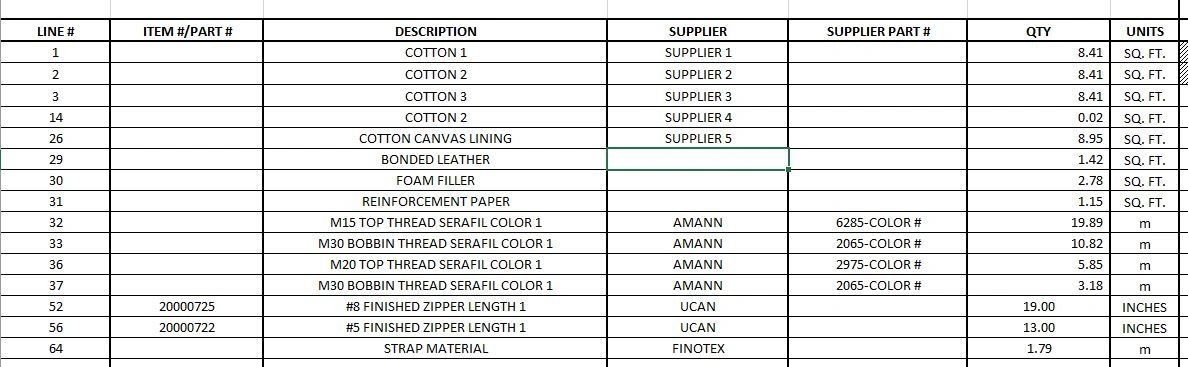
- Part numbers: These likely come from the factory, however, you may also have a set of part numbers, list both if needed.
- Usage of each: Could be length, or volume measurements like ml or liter.
- Patterns: List out the pattern sizes that make up the usage if applicable. You may have a tshirt that has 3 separate patterns to make one shirt, list the size.
- Unit of measure: Note if you are measuring in grams, millimeters, etc.
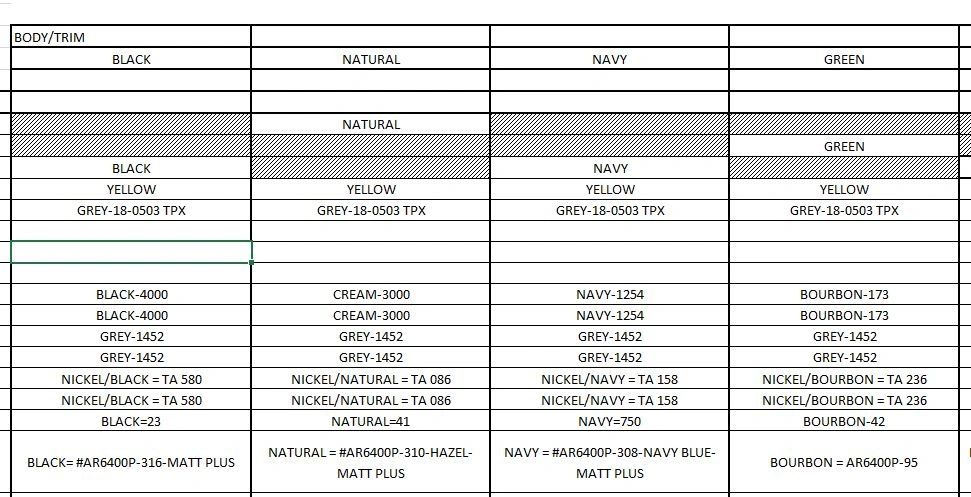
- Color: If you have clothing for example, and you have blue shirts, black shirts, orange shirts, you need a BOM for each, or at least a way to note the colorways on the single BOM so you can account for all the orange thread you need, black material, etc.
- Country of origin of material: Sometimes you will need to specify what percentage of each material makes up the product. Catching it here makes this much less difficult.
- Hardware or consumables: If you need cups to run tests in, you need to make sure that is included in the BOM even though it’s not a direct ingredient. Check with finance for something like consumables, they may want it counted differently.
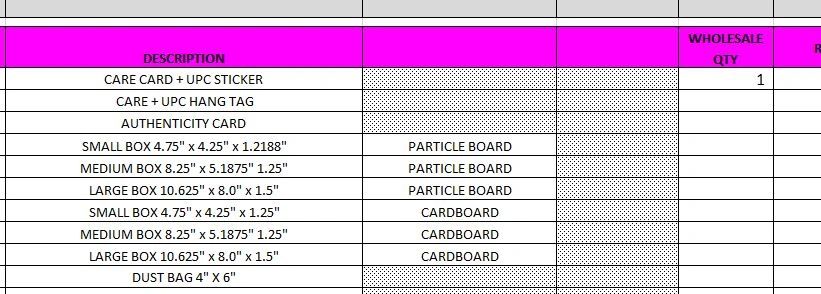
- Packaging: Account for shipping materials to get it to a store or customer, tags, boxes, etc.
- Anything else that may go into producing a single widget that is not listed here.
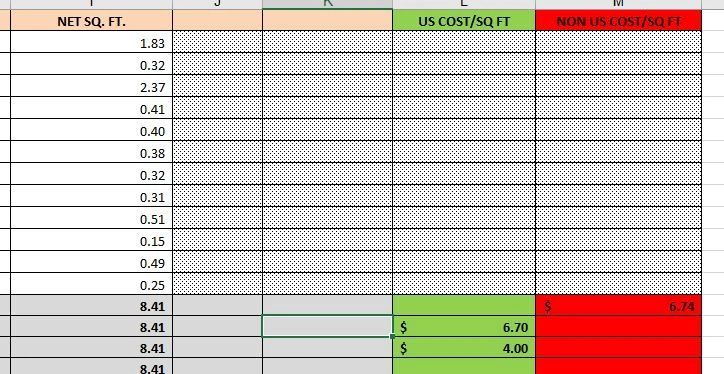
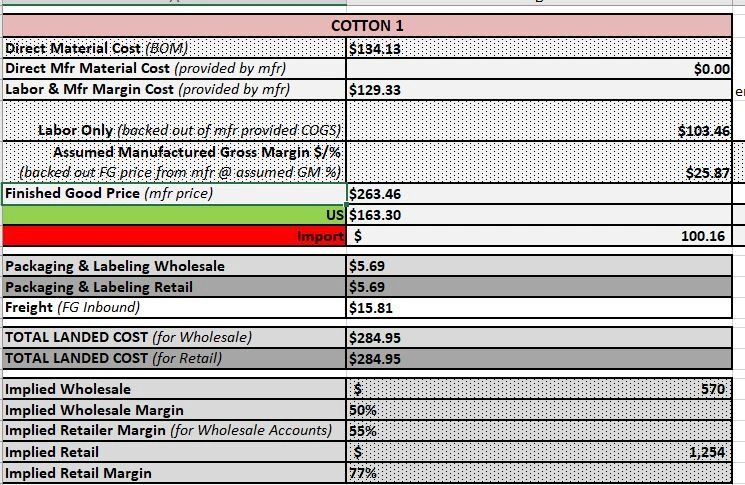
- Costing info on a separate tab is handy where you can link these fields to determine the total finished cost and margins.
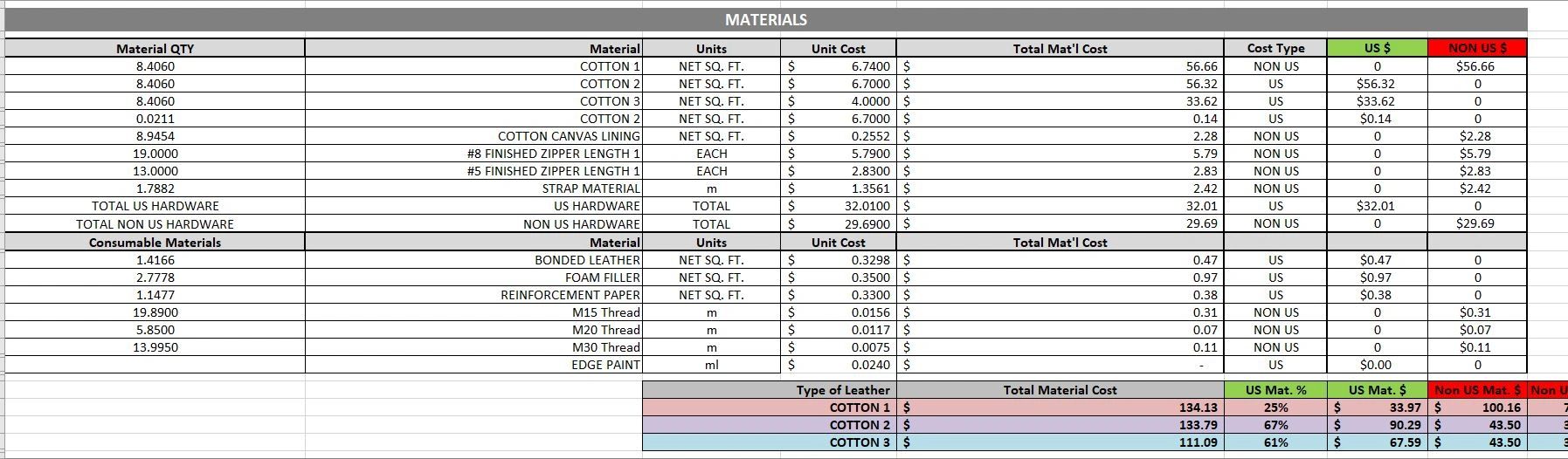
Above is a sample of total cost, and below is a further split out to look specifically at margins, not just the cost of product.
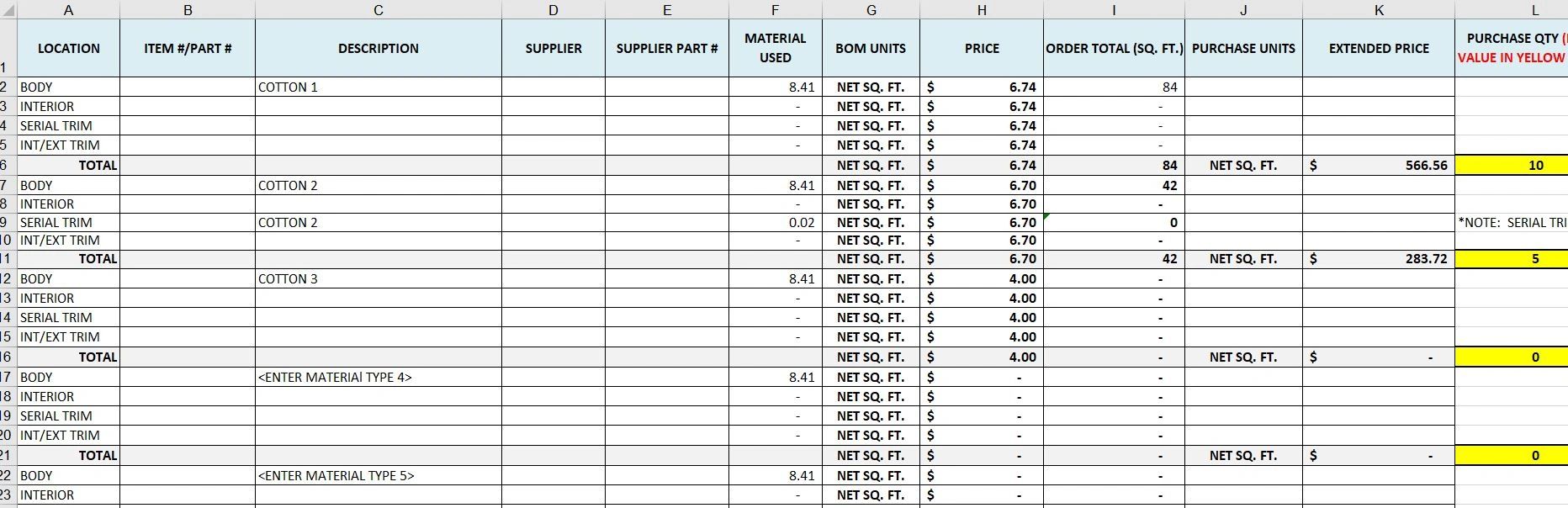
- Ordering info on the spreadsheet is handy as well so you may link all of the tabs to quickly generate order quantity based on how many of the items you plug in in yellow.
So, how is this going to solve your problem? Let's recap. You now have all of the information needed for a manufacturer or your own factory to order material, to understand the cost that goes into the materials, and you can take this and measure it up against what is actually being used each month or each round of production. If you find you are placing filler orders, you are going to want to review the BOM to ensure scrap is correctly calculated and you are maximizing the material usage. Once you have this handled, you can add labor and factory costs, and determine your final, all-in costs for products to then review margins and pricing.
In summary, a bill of materials is required in most manufacturing environments and needs to include very specific items. You can build off of that though to determine how much material you need to be ordering and should be using to find waste happening. When you find gaps like this, you can work on changes to the process to get more aligned with where material consumption should be.
Written by Nicole Hullihen, January 1st, 2022