
Business Holidays 2026, 2027, 2028
.png)
If you run a business, manage a team, or plan operations, knowing upcoming business holidays isn’t optional, it’s essential.
Miss a holiday and you risk:
- Missed deadlines
- Payroll issues
- Team scheduling conflicts
- Lost productivity
But when you plan ahead, you gain:
- Better team coordination
- Clear timelines
- Stronger operational control
This guide gives you a complete list of major business holidays for 2026, 2027, and 2028, including:
- Holiday name
- Date
- Day of the week
- Year
So you can plan your business with clarity.
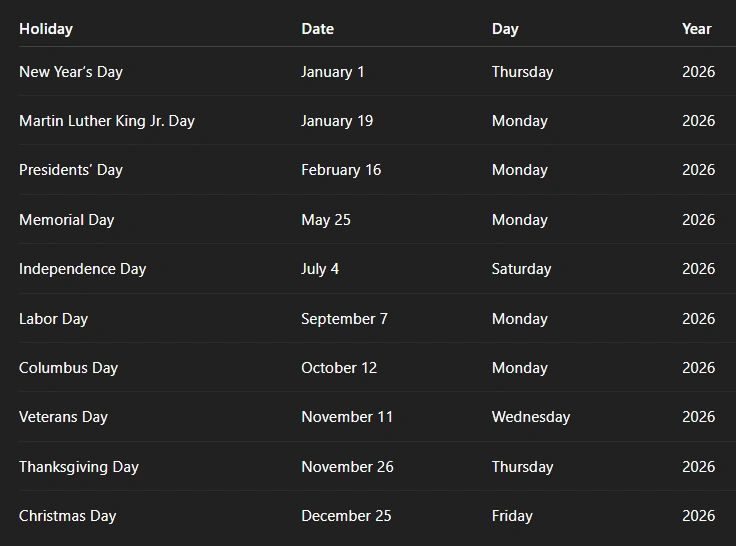
United States 2026 BUSINESS HOLIDAYS
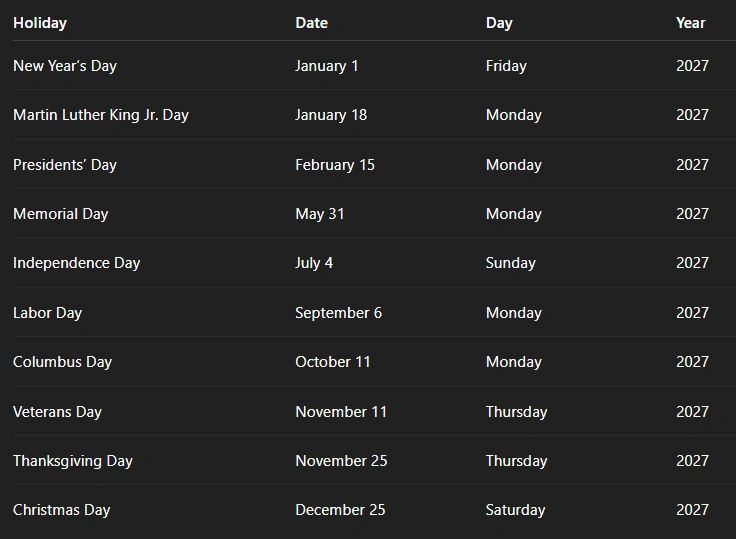
US 2027 BUSINESS HOLIDAYS
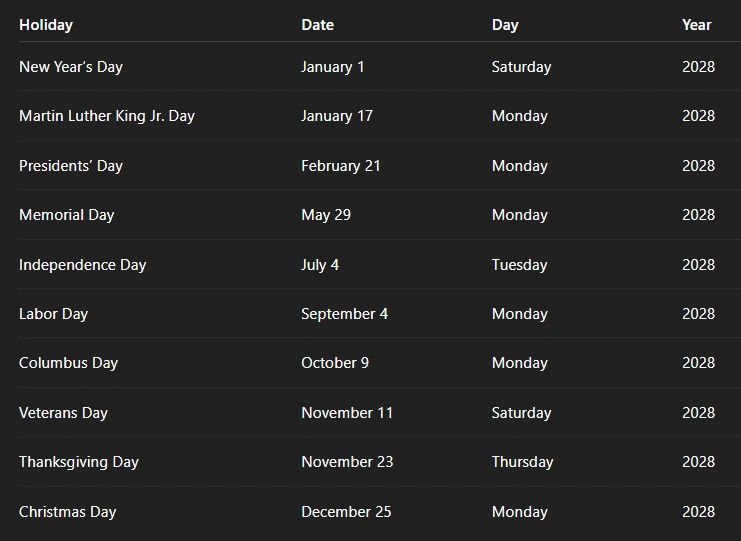
US 2028 BUSINESS HOLIDAYS
How to Use This for Your Business (Most People Don’t Do This)
Most businesses just “note” holidays.
High-performing teams plan around them.
Here’s how to actually use this list:
1. Plan Your Year in Advance
At the start of each year:
- Block holidays on your calendar
- Identify shortened weeks
- Adjust deadlines early
👉 This prevents last-minute chaos
2. Align Team Availability
Holidays impact:
- PTO
- Coverage
- Scheduling
Ask:
- Who’s off?
- Who’s covering?
3. Adjust Project Timelines
Example: If a deadline falls near Thanksgiving or Christmas: 👉 Move it earlier or later
Never assume full productivity during holiday weeks.
4. Manage Payroll and Billing
Holidays affect:
- Pay cycles
- Contractor invoices
- Client billing timelines
👉 Plan processing dates ahead of time
5. Use Holidays Strategically
Smart operators:
- Schedule lighter work weeks
- Plan internal reviews
- Use downtime for strategy
Key Business Considerations by Year
🔹 2026 Insight
- July 4 falls on a Saturday 👉 Expect observed holiday shifts (Friday)
🔹 2027 Insight
- Christmas is on a Saturday 👉 Many businesses close Friday (Dec 24)
🔹 2028 Insight
- Christmas lands on a Monday 👉 Creates a long weekend opportunity
Common Mistakes Businesses Make
❌ Not Planning Around Holiday Weeks
Short weeks = lower output But most teams still plan full workloads
❌ Ignoring Observed Holidays
If a holiday falls on a weekend: 👉 It’s often observed on a weekday
❌ No Central Calendar
If everyone tracks holidays differently: 👉 You get misalignment
❌ Overloading Pre-Holiday Weeks
Teams rush → quality drops → stress increases
Pro Tip: Create a Business Holiday System
Instead of just listing holidays, build a system:
- Shared calendar
- Linked project timelines
- Team visibility
- Deadline adjustments
👉 This turns holidays from disruptions into planned events
📊 COPY-PASTE TEMPLATE: BUSINESS HOLIDAY PLANNER
Add:
- Observed dates
- Team availability
- Business impact
This turns a list into: 👉 A planning tool
Frequently Asked Questions About U.S. Business Holidays
What are the main U.S. business holidays?
The most commonly recognized U.S. business holidays include New Year’s Day, Martin Luther King Jr. Day, Presidents’ Day, Memorial Day, Independence Day, Labor Day, Columbus Day, Veterans Day, Thanksgiving Day, and Christmas Day. These are widely observed by federal institutions and many private businesses.
Are businesses required to close on federal holidays?
No, private businesses are not legally required to close on federal holidays. While government offices and banks typically close, businesses can choose whether to remain open based on their operations, industry, and company policy.
What are observed holidays in the United States?
Observed holidays occur when a holiday falls on a weekend. If a holiday lands on a Saturday, it is usually observed on the Friday before. If it falls on a Sunday, it is typically observed on the following Monday. Many businesses follow this structure for scheduling and payroll purposes.
Do employees get paid for holidays?
There is no federal law requiring employers to provide paid holidays. Whether employees receive paid time off depends on company policy, employment agreements, or industry standards. Many companies offer paid holidays as part of their benefits package.
How do holidays impact business operations?
Holidays can affect productivity, staffing, deadlines, and customer expectations. Shortened work weeks, increased time off requests, and reduced availability can all impact operations, making advance planning essential.
How should businesses plan around holidays?
Businesses should plan ahead by adjusting project timelines, aligning team availability, scheduling around shorter work weeks, and preparing for reduced productivity. Using a shared calendar and setting expectations early helps avoid last-minute disruptions.
Why is it important to track business holidays in advance?
Tracking holidays allows businesses to manage schedules, payroll, and workloads more effectively. It ensures teams stay aligned, prevents missed deadlines, and helps leaders plan work more strategically throughout the year.
What is the difference between federal holidays and company holidays?
Federal holidays are designated by the U.S. government and apply to federal employees and institutions. Company holidays are determined by individual businesses and may include additional days or exclude certain federal holidays depending on the organization.
Final Thoughts: Holidays Should Be Planned, Not Managed
If you take one thing from this:
👉 Holidays don’t disrupt your business—lack of planning does.
When you:
- Plan early
- Align your team
- Adjust timelines
You turn holidays into a competitive advantage instead of a disruption.
Where This Fits Into Your Business
Holiday planning isn’t just about dates.
It connects to:
- Team scheduling
- Project timelines
- Payroll and billing
- Operational execution
If those aren’t connected, things fall through the cracks.
That’s where systems like Updoot come in.
Updoot helps you:
- Align your team around schedules
- Track work across changing timelines
- Assign accountability
- Keep everything visible in one place
Because the real challenge isn’t knowing the holidays.
👉 It’s managing the work around them.
Opens in Google Drive — view and download for free