
All About Process Mapping
.png)
In today’s fast-paced business world, efficiency and clarity are key to achieving success. One of the most effective tools for improving operational processes is process mapping. By visually representing workflows, process mapping helps businesses identify inefficiencies, streamline operations, and improve overall performance. However, like any tool, it has its strengths and weaknesses and knowing when and how to use it is crucial.
What is Process Mapping?
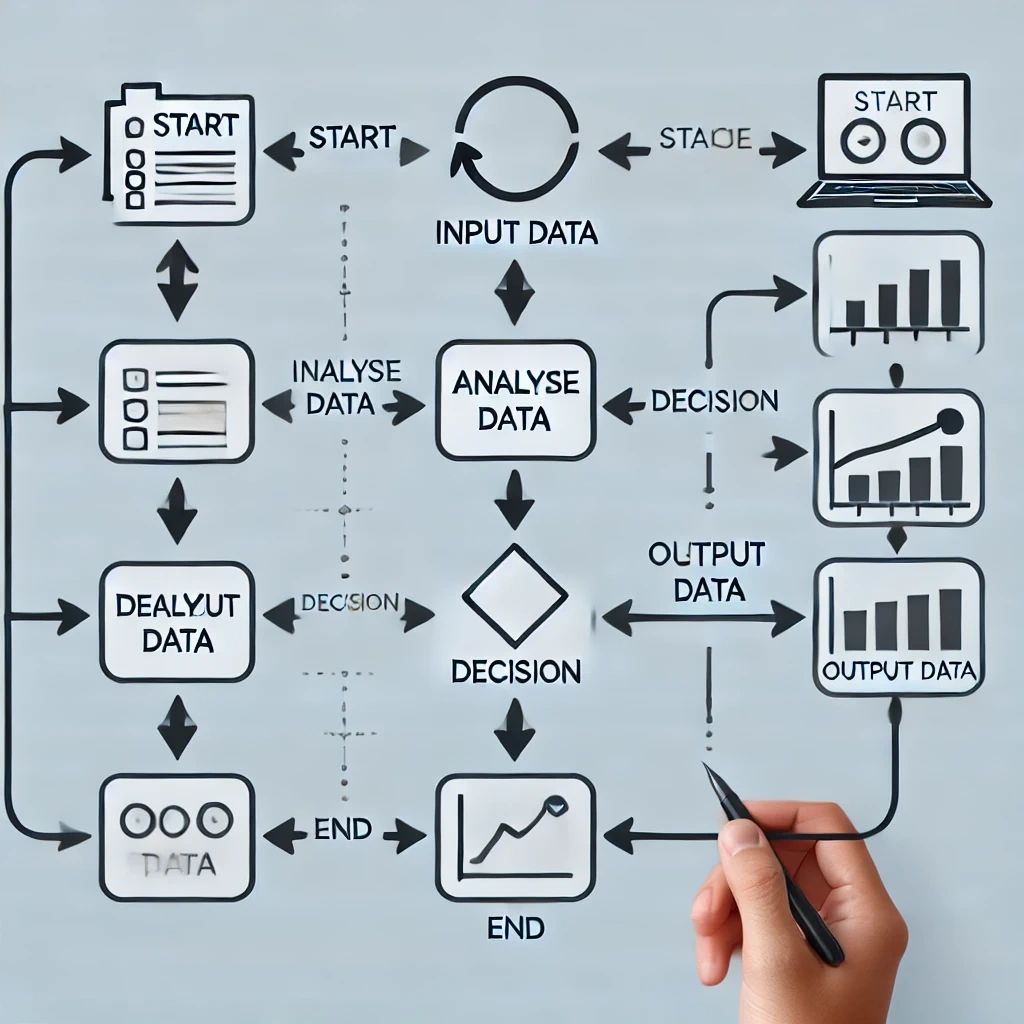
Process mapping is the technique of visually depicting the steps in a process or workflow. It involves creating a diagram that illustrates the sequence of tasks, decision points, inputs, outputs, and the interactions between various elements within a process. This map provides a clear, concise, and easy-to-understand representation of how work flows through an organization.
Process maps typically use standardized symbols, such as:
- Circles: Represent start or end points.
- Rectangles: Represent tasks or actions.
- Diamonds: Represent decision points where yes/no questions are asked.
- Arrows: Indicate the flow of work from one step to another.
By mapping out a process, you can see how it functions, identify potential bottlenecks, and find opportunities for improvement.
How Does Process Mapping Work?
Process mapping is typically conducted through the following steps:
Identify the Process: Begin by determining the process or workflow that you want to map. This could be anything from a production process, a customer service workflow, or an internal approval process.
Gather Data: Collect information about each step in the process. This involves talking to team members, reviewing documents, or observing the workflow in action. The goal is to capture every step and decision point accurately.
Define Key Components: Identify the inputs (resources or materials), outputs (final products or results), tasks (actions taken), and decision points (where choices are made) in the process.
Map the Process: Use a diagramming tool or software (like Lucidchart, Microsoft Visio, or even paper and pen) to create the process map. Arrange the components in a logical sequence, ensuring clarity and simplicity.
Analyze and Optimize: Once the process map is created, analyze it for inefficiencies, bottlenecks, redundant steps, or unnecessary complexity. Look for areas to improve by removing, combining, or automating steps.
Implement Improvements: Based on your analysis, make changes to the process. This may involve streamlining tasks, automating steps, or redesigning workflows to improve efficiency and effectiveness.
Review and Refine: After implementing changes, continue to monitor and review the process to ensure the improvements are working and that the process is still aligned with business goals.
When to Use Process Mapping
Process mapping is useful in a variety of situations, including:
Identifying Bottlenecks: If your team is experiencing delays, inefficiencies, or performance issues, process mapping helps pinpoint where problems occur in the workflow. By visualizing the entire process, you can easily spot areas where work gets backed up or slows down.
- Example: In a manufacturing process, you may notice that production slows at a particular step, like quality control. Process mapping can help determine if additional resources are needed or if tasks can be streamlined.
Improving Processes: Process mapping helps identify redundancies and inefficiencies that prevent smooth workflows. Once identified, steps can be removed, restructured, or automated to optimize the overall process.
- Example: In customer service, process mapping can reveal that multiple employees handle similar tasks, leading to delays. By streamlining the process and assigning clear responsibilities, service can be expedited.
Training and Onboarding: Process maps are valuable tools for training new employees, helping them understand how tasks and workflows are structured. A visual map makes it easier to communicate processes compared to written procedures.
- Example: When onboarding new staff, a process map of how a customer complaint is handled can provide clear guidelines on the steps they need to follow.
Compliance and Standardization: In regulated industries, process maps are used to ensure that processes are consistent and compliant with industry standards. By documenting processes, companies can verify that they follow the correct steps, reducing the risk of errors or non-compliance.
- Example: In healthcare, mapping out patient intake processes ensures that all required steps are followed for compliance with regulations.
Continuous Improvement (Kaizen): Process mapping is a key component of continuous improvement methodologies like Lean and Six Sigma. It helps teams continuously evaluate processes, make incremental improvements, and drive efficiency.
- Example: In a software development company, process maps help identify slow points in the deployment pipeline, leading to faster and more reliable software releases.
Drawbacks of Process Mapping
While process mapping can be highly effective, it also has its limitations. Understanding these drawbacks can help you use process mapping more effectively.
Time-Consuming: Creating a process map, especially for complex processes, can be time-consuming. It requires gathering detailed data, engaging stakeholders, and ensuring that every aspect of the process is accurately captured. For businesses with limited resources, the upfront time investment may seem daunting.
- Solution: Start by mapping critical processes first and use process mapping as part of an ongoing improvement effort rather than an immediate overhaul of all operations.
Over-Simplification: In some cases, process maps can oversimplify complex processes. This might lead to the omission of important details or nuances that affect how the process actually works in practice.
- Solution: Ensure that the map accurately reflects reality by involving team members who are directly involved in the process. Consider creating multiple maps for different levels of detail.
Limited Focus: Process maps generally focus on the steps within a process but may not account for external factors, such as resource availability, external dependencies, or market dynamics. As a result, focusing only on internal steps may miss critical external influences that affect process outcomes.
- Solution: Use process mapping in conjunction with other tools, such as SWOT analysis, to get a more comprehensive view of the process and its external factors.
Resistance to Change: Once a process map is created and recommendations for improvement are made, employees may resist the changes, especially if the changes involve altering established workflows. Resistance can lead to difficulties in implementation.
- Solution: Involve employees early in the process mapping stage and seek their feedback on potential changes. Clear communication and involvement can help reduce resistance to changes.
Not Always Actionable: A process map may highlight inefficiencies, but it doesn’t always provide solutions. While it shows where the problems are, it may not always offer clear steps on how to resolve them.
- Solution: Combine process mapping with other problem-solving techniques (like Root Cause Analysis or Brainstorming) to generate actionable solutions.
Process mapping is a valuable tool for businesses looking to improve operational efficiency, reduce waste, and ensure smoother workflows. By visualizing processes, identifying bottlenecks, and improving communication, organizations can drive significant improvements in productivity and customer satisfaction. However, it’s important to recognize its limitations, including the potential for oversimplification and the time required to create effective maps. When used appropriately, process mapping can be a powerful part of a broader operational improvement strategy.
More resources
Harvard Business Review – "The Power of Process Mapping" hbr.org
https://leanconstruction.org/lean-topics/process-mapping/
https://www.smartsheet.com/essential-guide-business-process-mapping?srsltid=AfmBOorMFrllkikddwlP0Y5fLQ06B-4GjOT7rWxHSlMflwaPN4r78t1F