
2-3-2 Work Schedule Explained and Template
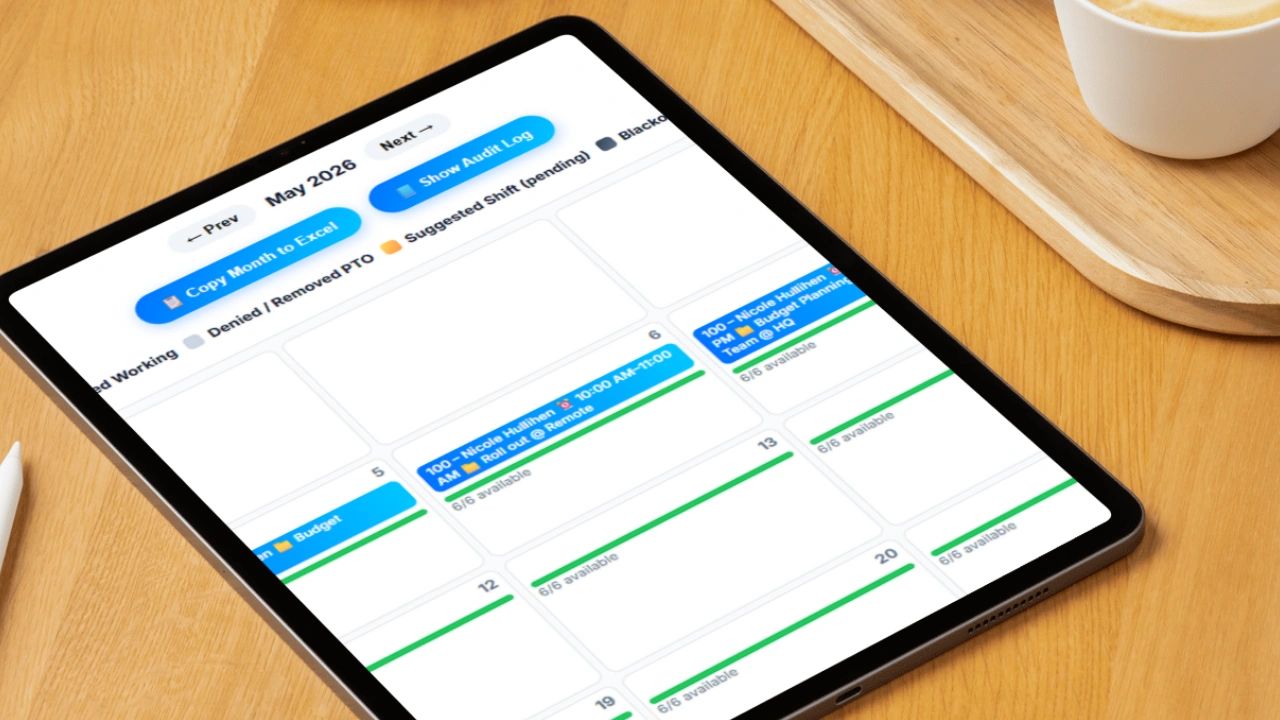
If you are running a business that needs consistent coverage but also want to give employees meaningful time off, the 2-3-2 work schedule is one of the most balanced shift patterns available.
It is simple, repeatable, and gives employees a mix of short workweeks and longer breaks.
But like any schedule, it only works if it matches your type of operation.
This guide breaks down exactly how the 2-3-2 schedule works, what makes it different, and whether it is the right fit for your team.
What Is a 2-3-2 Work Schedule
The 2-3-2 schedule is a rotating shift pattern where employees work:
- 2 days on
- 3 days off
- 2 days on
Then the pattern flips the following week.
It typically runs on 12-hour shifts and repeats every two weeks.
How the 2-3-2 Schedule Works
Week 1:
- Monday: Work
- Tuesday: Work
- Wednesday: Off
- Thursday: Off
- Friday: Off
- Saturday: Work
- Sunday: Work
Week 2:
- Monday: Off
- Tuesday: Off
- Wednesday: Work
- Thursday: Work
- Friday: Off
- Saturday: Off
- Sunday: Off
Then it repeats.
What Makes 2-3-2 Different
Compared to the more common 2-2-3 schedule, the 2-3-2 gives:
- Longer breaks in the middle of the schedule
- Shorter continuous work stretches
- More recovery time between shifts
It is slightly more employee-friendly in terms of rest, but still provides strong coverage.
Key Benefits of the 2-3-2 Schedule
1. More Consecutive Days Off
The biggest advantage is the 3 days off in a row.
This gives employees:
- Real recovery time
- Better work-life balance
- Time to handle personal commitments
This is often preferred over scattered days off.
2. Shorter Work Streaks
Employees only work 2 days at a time before getting a break.
This reduces:
- Fatigue
- Burnout
- Performance drop-off
Compared to 3-day stretches in other schedules, this feels lighter.
3. Predictable Rotation
The schedule repeats every 2 weeks.
Employees always know:
- When they are working
- When they are off
This consistency improves planning and satisfaction.
4. Good for 24/7 Coverage
Like other rotating schedules, 2-3-2 works well for:
- Manufacturing
- Warehousing
- Healthcare
- Security
- Field operations
You can run day and night shifts with rotating crews.
5. Balanced Workload
Employees alternate between:
- Short work periods
- Longer rest periods
This balance helps maintain steady performance.
Downsides of the 2-3-2 Schedule
1. Still Uses 12-Hour Shifts
Just like 2-2-3, this schedule relies on long shifts.
That means:
- Physical fatigue
- Mental fatigue
- Not ideal for all roles
If your work is intense, this can be a challenge.
2. Weekend Rotation Can Be Less Predictable
Depending on how you set it up:
- Weekends may not alternate as cleanly as 2-2-3
- Some employees may work more weekends
This can impact satisfaction if not managed properly.
3. More Complex to Set Up
Compared to simpler schedules:
- It takes more planning
- Requires clear rotation logic
- Needs consistency to avoid confusion
Once set, it runs smoothly, but setup matters.
4. Communication Gaps Between Teams
Because employees are off for longer stretches:
- Teams may miss updates
- Handoffs can be inconsistent
- Communication needs to be structured
5. Not Ideal for All Business Types
Works best for:
- Shift-based environments
- Operational roles
Not ideal for:
- Office roles
- Creative work
- Roles needing daily continuity
Hours Breakdown
With 12-hour shifts:
- Some weeks: ~24 hours
- Some weeks: ~48 hours
This averages out over time but requires attention to:
- Overtime rules
- Payroll structure
Simple 2-3-2 Schedule Template
Use this in Excel or scheduling software.
2-3-2 SCHEDULE TEMPLATE
When to Use a 2-3-2 Schedule
This schedule works best when:
- You need continuous coverage
- Work is shift-based
- Employees benefit from longer rest periods
- Fatigue is a concern
It is especially useful in environments where:
- Recovery time improves performance
- Work intensity is high
When to Avoid It
Avoid 2-3-2 if:
- You need consistent daily staffing
- Work changes frequently
- You rely on short shifts
- Team collaboration requires daily overlap
2-3-2 vs 2-2-3 (Quick Comparison)
- 2-2-3: More balanced weekends, longer work stretches
- 2-3-2: More rest time, shorter work stretches
If fatigue is your issue, 2-3-2 is often better.
If weekend fairness matters more, 2-2-3 may win.
Using This Schedule With Software Like Updoot
This is where scheduling becomes operational.
With Updoot, you can:
- Assign rotating 2-3-2 shifts to employees
- Attach each shift to a project, job, and location
- See exactly who is working, where, and on what
- Adjust schedules without breaking the rotation
- Track time directly against projects
So instead of just:
- “Employee works Saturday”
You get:
- Employee works Saturday
- Project: Service Call
- Job: Maintenance
- Location: Site B
That turns your schedule into a real execution system.
Final Take
The 2-3-2 schedule is a strong option if your goal is:
- Reducing fatigue
- Giving employees more recovery time
- Maintaining consistent coverage
It is not as commonly used as 2-2-3, but in the right environment, it can perform better.
The key is simple:
Match the schedule to the type of work.